Blog

  • What to Expect During a Yoga Teacher Training in Rishikesh?

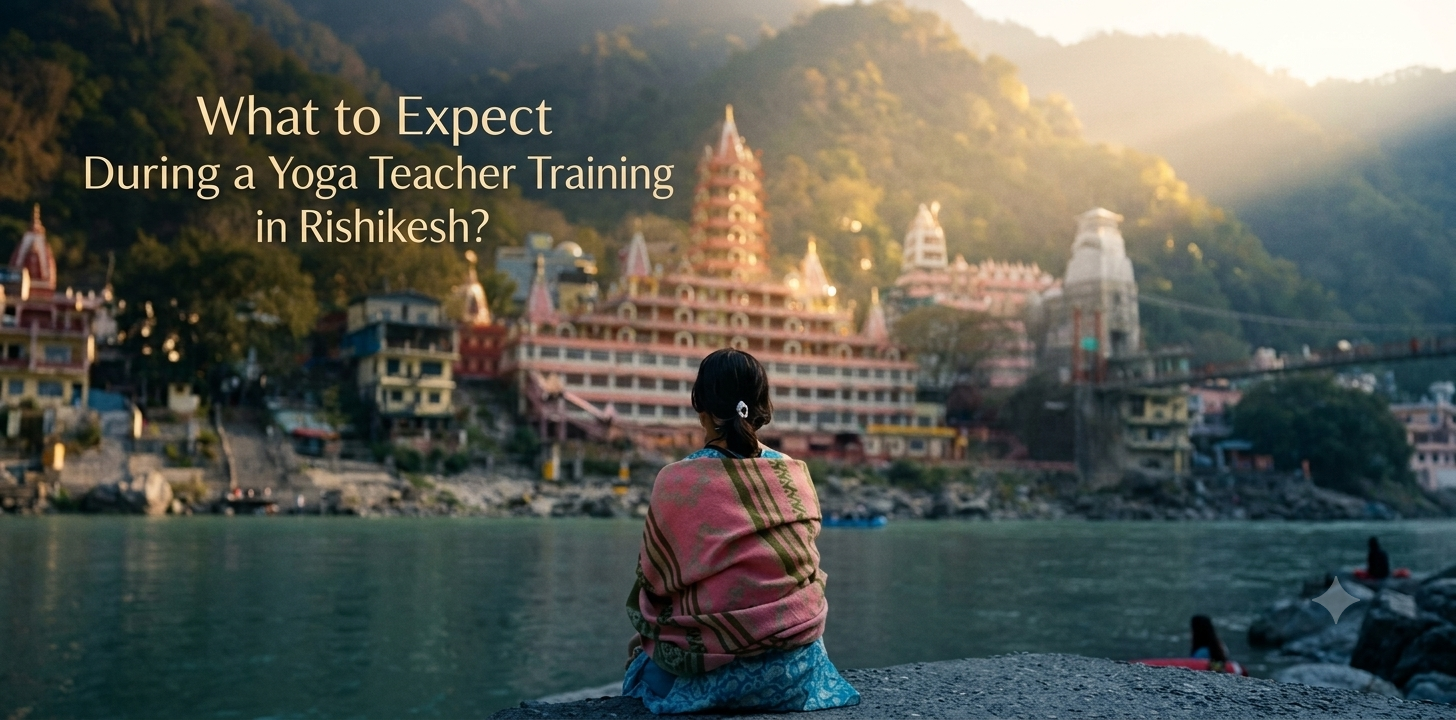
    What to Expect During a Yoga Teacher Training in Rishikesh?

    What to Expect During a yoga teacher training in Rishikesh? Step-by-Step Guide

    Many students from around the world come to Rishikesh for yoga teacher training in Rishikesh.

    The expectations students carry while travelling to Rishikesh are that they will learn yoga in the city of great yogis.

    One of the favorite courses of the students, especially from Western countries, is the 200 hour yoga teacher training in Rishikesh.

    The Himalayan town, with the holy River Ganga along its side, makes Rishikesh more attractive for the yoga enthusiast.

    If you are considering a YTT in Rishikesh, it helps to know what the experience really looks like before you book your flight.

    This manual takes you through the daily schedule, the curriculum, the meals, the difficulties, and the little things that make the difference between a good course and one that transforms your life.

    Why choose yoga teacher training in Rishikesh?

    The reasons to choose yoga teacher training in Rishikesh:

    • Rishikesh is called the World’s Yoga Capital for the name it earned. It has been home to great sadhus and yogis for centuries.
    • Yoga lives in the air of Rishikesh. Students from around the world gather at one destination to complete their yoga teacher certification in India.
    • The morning bells, students and the conversation about yoga all over the town make Rishikesh the first choice for students to start their yoga instructor course.
    • Ganges and Himalayan foothills both make Rishikesh a perfect destination to practise yoga.
    • Most foreign students believe that yoga teacher training in Rishikesh is for beginners. Due to its connection with yoga.

    How to choose a course and certification for yoga teacher training in Rishikesh?

    Course and certification for yoga teacher training in Rishikesh overview:

    • Before choosing your course, look at your interest in yoga. Not every school do not offer every style.
    • Look for the daily yoga schedule. If it fits your preference or not.
    • Many students start with a 200-hour yoga teacher training. It is the foundational course in yoga. So begin your yoga journey with it.
    • 300 hour YTTC and 500 hour YTTC are a few advanced courses which is generally opt by advanced practitioners to deepen their knowledge.
    • If you want to practice yoga internationally as a profession, always choose a yoga school with Yoga Alliance RYT 200 certification and Yoga Alliance certified.

    Certification as an RYT 200 is widely recognised by studios and gyms abroad. Beyond the badge, check the following:

    • The experience and lineage of the teachers
    • Class size (smaller groups mean more personal feedback)
    • The balance between practice, theory, and teaching practice
    • Honest reviews from past students

    Why choose Sriezaa Yogshala and what to expect during a yoga teacher training in Rishikesh?

    Overview of what to expect during a yoga teacher training in Rishikesh at Sriezaa Yogshala:

    • An authentic yoga school with Yoga Alliance RYT 200 certification and Yoga Alliance certified.
    • Yoga instructors and teachers with more than 15 years of experience.
    • One of the most prestigious and best schools for a 200-hour YTTC in India.
    • Believes in Quality over Quantity.
    • Gives Hatha and Ashtanga yoga training.
    • Also provides the best yoga retreat in Rishikesh.
    • One of the most affordable yoga schools for yoga teacher training Rishikesh India.
    • Traditional Guru-Shishya learning approach
    • Peaceful Himalayan environment
    • Focus on spiritual growth and self-awareness.
    • Ayurveda and detox practices

    What does a day in yoga teacher training in Rishikesh look like?

    A day in yoga teacher training in Rishikesh at Sriezaa Yogshala look like overview.

    # Time Activity
    1. 06:00 – 07:30 AM Hatha Yoga
    2. 08:00 – 09:00 AM Pranayama & Mantra Chanting
    3. 09:00 – 09:30 AM Breakfast
    4. 11:15 – 12:15 PM Anatomy, Physiology & Biomechanics
    5. 12:20 – 01:20 PM Alignment & Teaching Methodology
    6. 01:20 – 02:00 PM Lunch
    7. 02:45 – 03:45 PM Yoga Philosophy & Ayurveda
    8. 04:00 – 05:15 PM Ashtanga Vinyasa Yoga
    9. 05:45 – 06:45 PM Meditation
    10. 07:00 – 07:45 PM Dinner

    What will you learn at yoga teacher training in Rishikesh at Sriezaa Yogshala?

    The subjects you will learn in the yoga teacher training in Rishikesh at Sriezaa Yogshala overview:

    • Traditional Hatha Yoga
    • Ashtanga Vinyasa Yoga
    • Pranayama and meditation
    • Shatkarma
    • Mantra Chanting
    • Yoga philosophy and anatomy classes
    • Alignment, Adjustment
    • Yoga Teaching methodology
    • Fundamentals of Ayurveda
    • Yogic Diet and Lifestyle

    What are the requirements for yoga teacher training in Rishikesh at Sriezaa Yogshala?

    • To join our intensive courses, applicants must be 16 years or older.
    • Strong determination to complete the course successfully is a must.
    • Commitment to attending and actively participating in all classes is required.
    • In case of recent injuries or surgeries, please inform our team beforehand.

    How to Prepare and What to Pack?

    • A good yoga mat (or check whether your school provides one)
    • A reusable water bottle
    • Warm layers and a shawl for mornings
    • A journal and pen (most of the schools provide them)
    • Basic medicines and any prescriptions
    • Mosquito repellent and sunscreen

    What is the cost of a Yoga teacher training in Rishikesh at Sriezaa Yogshala?

    Course Course Fee Duration of Course
    100 Hour Yoga Teacher Training $599 12 Days
    200 Hour Yoga Teacher Training $999 25 Days
    300 Hour Yoga Teacher Training $1,299 28 Days

    What is the best time to do yoga teacher training in Rishikesh?

    The best time to do yoga teacher training in Rishikesh

    • February to April and September to November, when the weather is pleasant
    • Summer (May to June) can be hot.
    • Monsoon (July to August) brings heavy rain, though it also makes the hills lush and green.
    • Winters (December to January) are cold in the mornings and evenings, so pack warm layers.

    Is yoga teacher training in Rishikesh worth it??

    For most students, yes. You will not just earn a certificate; you will gain confidence, a stronger practice, a richer understanding of yoga’s roots, and a community of like-minded people. Even if you never teach a class, the discipline and self-awareness you build stay with you.

    The key is to choose a school that matches your goals, arrive with an open mind, and permit yourself to be a beginner again.

    Conclusion

    Yoga teacher training in Rishikesh offers more than just a certificate; it is an immersive journey into the roots of yoga, self-discovery, and community. Whether you are seeking to deepen your practice, start a teaching career, or simply explore the spiritual traditions of India, Rishikesh provides a unique and transformative environment. By choosing the right school, preparing thoughtfully, and embracing the full experience with an open heart, you can return home not only as a certified yoga teacher but as a more confident, balanced, and inspired individual.

    Frequently Asked Questions

    Do I need prior yoga experience to join a yoga teacher training in Rishikesh?

    No. Most 200-hour YTTCs, including the one at Sriezaa Yogshala, are designed for beginners as well as practicing yogis. What matters more is your commitment to attending and participating fully in the course.

    How long does a yoga teacher training in Rishikesh usually last?

    It depends on the course level. A 100-hour training typically runs about 12 days, a 200-hour training around 25 days, and a 300-hour training about 28 days.

    Is the certification from a Rishikesh YTT recognized internationally?

    Yes, as long as the school is Yoga Alliance certified and offers RYT 200 accreditation. This certification is widely recognized by studios and gyms abroad, so it’s worth confirming before you enroll.

    What should I pack for a yoga teacher training in Rishikesh?

    Bring a yoga mat (if your school doesn’t provide one), a reusable water bottle, warm layers for cool mornings, a journal, any personal medications, and mosquito repellent or sunscreen.

    When is the best time of year to do a yoga teacher training in Rishikesh?

    February to April and September to November offer the most pleasant weather. Summers (May–June) run hot, monsoon season (July–August) brings heavy rain, and winters (December–January) are cold in the mornings and evenings.
     

  • What 200 Hour Yoga Teacher Training Subjects Tell You?

    What 200 Hour Yoga Teacher Training Subjects Tell You?

    What 200 Hour Yoga Teacher Training Subjects Tell You?

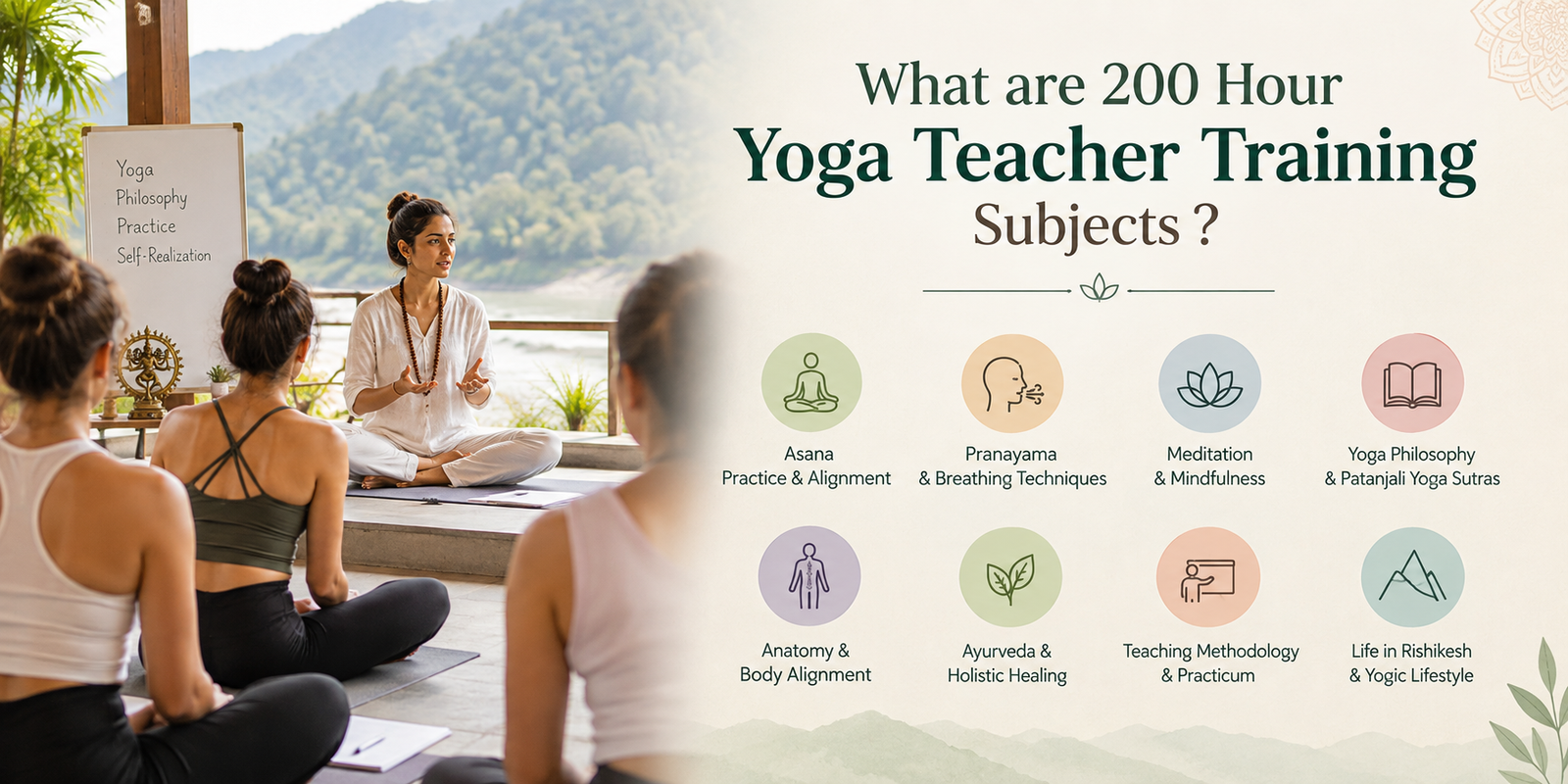
    If you are a beginner and want to know about 200 hour yoga teacher training subjects and the areas covered, you are in the right place. This blog will help you know what you will be learning on the journey of 200 hour yoga teacher training.

    200 hour YTTC curriculum does not only teach you yoga poses. It is the foundation of your yoga journey. This will also help you get an idea of what the course looks like.

    It will also help you to know more about the yoga school you are going to enrol in.

    200 hour yoga teacher training syllabus will help you to know if the school follows the Yoga Alliance USA curriculum or not.

    It builds the foundation you’ll actually stand on when you’re the one leading a class. Here’s exactly what the 200 hours cover, subject by subject.

    What is 200 hour yoga teacher training subjects?

    The following is the 200 hour yoga teacher training subjects breakdown:

    • Asana (Postures): Alignment, adjustments, and safe practice of foundational to intermediate poses
    • Pranayama (Breathwork): Core breathing techniques used to regulate energy and calm the nervous system
    • Yoga Philosophy: Patanjali’s Yoga Sutras, the eight limbs of yoga, and classical yogic thought
    • Anatomy & Physiology: How the body moves and responds to asana, with a focus on injury prevention
    • Teaching Methodology: Sequencing, cueing, class management, and how to hold space as a teacher
    • Meditation & Mindfulness: Guided and silent meditation techniques for personal practice and instruction
    • Practicum: Supervised hands-on teaching practice with feedback from senior teachers
    • Ethics & Lifestyle: The teacher-student relationship, professional conduct, and yogic lifestyle principles.

    What is taught in 200 hour yoga teacher training subjects?

    The curriculum of Sriezaa yogshala’s 200 hour yoga teacher training subjects are designed in full accordance with Yoga Alliance USA standards for the 200 hour yoga teacher training subjects. As a student, you would have many questions, like: What is yoga philosophy class, and is anatomy taught in YTTC?

    The following is Sriezaa Yogshala’s yoga teacher training curriculum in Rishikesh:

    What will you learn in Asana?

    The majority of class time in the 200 hour yoga teacher training subjects at Sriezaa Yogshala is devoted to asana (posture) practice.

    Classes not only execute poses but go beyond them. Proper alignment for each posture corrects common or typical mistakes and explains how different bodies adapt poses.

    It not only teaches you to become perfect as a student, but also helps you see yourself as a future yoga teacher.

    What will you learn in Pranayama?

    Pranayama is taught for your own discipline and personal growth as part of the 200 hour YTTC curriculum.

    Pranayama at yoga school is also taught for you to become a yoga teacher.

    Training teaches you the foundational breathing control techniques.

    Make you understand why controlling breathing is an important part of yoga.

    Pranayama is framed not as an add-on to asana, but as core to the practice itself.

    What will you learn in Yoga Philosophy?

    • Study Patanjali’s Yoga Sutras, which is the foundational text systematising yogic thought.
    • Explore the Bhagavad Gita and its teachings on duty, action, and self-realization.
    • Learn the eight limbs of yoga (Ashtanga), called the complete ethical and spiritual framework.
    • Examine Samkhya philosophy, the dualistic system underlying yogic thought.
    • Understand foundational principles of Vedic yogic wisdom.
    • Experience the shift from yoga-as-physical-practice to yoga-as-complete-system-for-conscious-living, often the most transformative part of the training.

    What will you learn in Anatomy & Physiology?

    Is anatomy taught in YTTC? It does not require a professional medical degree, but a solid knowledge of the functioning of the body.

    It focuses on how muscles, joints and breath work together.

    Key areas typically covered in 200 hour yoga teacher training subjects are:

    • Biomechanics of common poses (alignment, load, risk points)
    • Breath mechanics (diaphragm, ribcage, how breath affects movement/stability)
    • Common injuries and contraindications
    • Adapting cues for different bodies/limitations
    • Musculoskeletal system (bones, joints, muscle groups, ranges of motion)

    What will you learn in Teaching Methodology?

    • Signifies the transition from individual practice to teaching others.
    • How to organise and construct a class from beginning to end using sequencing
    • Cueing is the process of explicitly guiding children through voice, language, and timing.
    • Adaptability: observing the situation and making last-minute changes to your strategy

    The emphasis shifts from “doing” the poses to “teaching” them well.

    What will you learn in Meditation & Mindfulness?

    Does 200 hour YTTC include meditation? This is one of the most frequently asked questions. Yes, meditation is included in the 200 hour yoga teacher training syllabus.

    Many yoga teacher training curriculum Rishikesh treat meditation as a personal or guiding practice.

    Being good at one does not make you good at the other.

    Guiding requires: clear verbal cueing, pacing, reading the room, holding space for others’ experiences.

    Personal practice requires: self-discipline, consistency, inner awareness, no audience to manage.

    What will you learn in Practicum?

    • Real teaching, not just theory, will lead actual class segments under guidance.
    • Direct feedback from experienced teachers/mentors in real time
    • Builds confidence that reading or watching demos alone can’t provide
    • Where all prior learning (philosophy, technique, observation) comes together in practice

    Why choose Sriezaa Yogshala in Rishikesh for your 200 hour YTTC?

    Choosing the right school is important and offers a unique experience for you 200 hour YTTC and 200 hour yoga teacher training syllabus for authenticity and offers:

    • Located in the spiritual heart of Rishikesh
    • Experienced and certified national and international yoga teachers.
    • Traditional Guru-Shishya learning approach
    • Peaceful Himalayan environment
    • Focus on spiritual growth and self-awareness.

    The 200 hour YTTC and 200 hour yoga teacher training syllabus in India at SriezaaYogshala are not just a course; they’re a way of transforming life.

    How to enrol in yoga school to complete a 200 hour yoga teacher training syllabus?

    To enrol in a yoga school to complete 200 hour yoga teacher training syllabus:

    • To join our intensive courses, applicants must be 16 years or older.
    • Strong determination to complete the course successfully is a must.
    • Commitment to attending and actively participating in all classes is required.
    • In case of recent injuries or surgeries, please inform our team beforehand.

    What are the scopes after completing 200 hour yoga teacher training syllabus?

    The scope after completing the 200 hour yoga teacher training syllabus:

    Teaching opportunities

    • Teach group classes at studios, gyms, or wellness centres.
    • Lead beginner-level or general/vinyasa/hatha classes (most 200hr certifications qualify you for foundational-level teaching)
    • Offer private one-on-one sessions.
    • Teach community classes (parks, corporate wellness, community centres)

    Specialized/niche paths

    • Kids’ yoga
    • Prenatal/postnatal yoga (usually needs extra certification)
    • Chair yoga or yoga for seniors
    • Corporate yoga sessions

    Online/digital

    • Run virtual classes or workshops.
    • Create content (YouTube, Instagram, online courses)
    • Build a personal brand/following

    Retreats & events

    • Assist at yoga retreats.
    • Lead workshops on specific themes (breathwork, philosophy, etc.)

    Further growth

    • Continue to 300hr training to become a 500hr certified teacher (RYT 500)
    • Specialise in areas like yoga therapy, Ayurveda, or meditation instruction.
    • Move into studio management or teacher training itself (long-term)

    Conclusion

    Completing a 200 hour yoga teacher training syllabus is a transformative journey on the path of yoga that lays the foundation for both personal growth and the path to becoming a confident, knowledgeable yoga teacher.

    Through a well-rounded curriculum that blends ancient philosophy, practical teaching skills, anatomy, and self-awareness, you gain the skills to guide others with authenticity and care. Whether you choose to teach, deepen your own practice, or explore new opportunities in the yoga world, this training empowers you to live and share the true essence of yoga beyond the mat.

    Frequently Asked Questions

    What subjects are covered in 200 hour yoga teacher training?

    A 200 hour YTTC covers eight core areas: Asana (postures), Pranayama (breathwork), Yoga Philosophy, Anatomy & Physiology, Teaching Methodology, Meditation & Mindfulness, Practicum (supervised teaching practice), and Ethics & Lifestyle. Together, these subjects take you from personal practice to being ready to lead a class.

    Is anatomy taught in 200 hour YTTC?

    Yes. You don’t need a medical degree, but the course teaches how muscles, joints, and breath work together — including pose biomechanics, breath mechanics, common injuries and contraindications, and how to adapt cues for different bodies.

    Does 200 hour yoga teacher training include meditation?

    Yes, meditation and mindfulness are a standard part of the 200 hour yoga teacher training syllabus. You learn both meditation as a personal practice and how to guide others through it — which require different skills (self-discipline vs. clear cueing and reading the room).

    What yoga philosophy is taught in 200 hour YTTC?

    Philosophy study typically includes Patanjali’s Yoga Sutras, the Bhagavad Gita, the eight limbs of yoga (Ashtanga), and Samkhya philosophy. This is where training shifts from yoga-as-exercise to yoga-as-a-complete-system-for-living.

    What can you do after completing a 200 hour yoga teacher training?

    Graduates can teach group or private classes, lead beginner-level Vinyasa/Hatha sessions, run online classes or build a content brand, or move into niche paths like kids’ yoga, chair yoga, or corporate wellness. Many go on to a 300 hour training to become RYT 500 certified.

    What are the eligibility requirements to enrol in a 200 hour YTTC?

    Applicants generally need to be 16 or older, committed to attending all classes, and should disclose any recent injuries or surgeries to the school beforehand.

  • What Happens After Completing a Yoga Teacher Training Course In India?

    What Happens After Completing a Yoga Teacher Training Course In India?

    What Happens After Completing a Yoga Teacher Training?

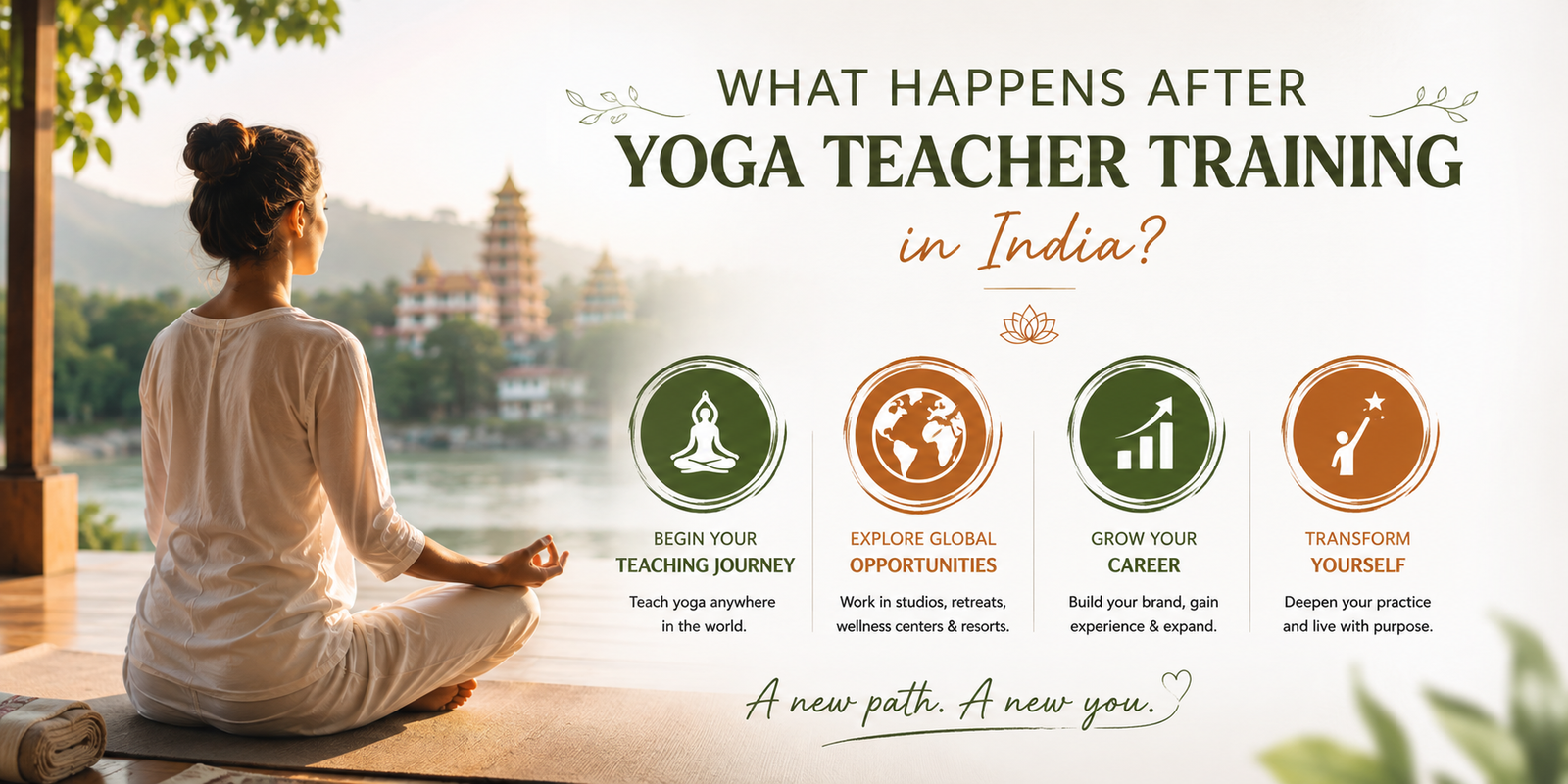
    Ending is the beginning of a new chapter. While everyone is left in silence with the question, “What happens after yoga teacher training in India?” Most of the students know that they will be a part of a yoga institution both personally as well as professionally. 

    While everyone is talking about what will happen at yoga teacher training, let us walk towards life after a 200-hour YTTC when you are on your own.

    When your mind is not able to think about the next steps after YTTC certification. 

    • When hard reality hits you with the competition around you. 
    • When you are on your own with a certification in Yoga Teacher Training. 

    This blog will help you figure out the way once you complete your Yoga Alliance Certification. A complete guide to what happens after yoga teacher training in India. 


    What is yoga teacher training?

    Yoga teacher training in India is a certification course specially designed for people who want to become professional yoga teachers and want to deepen their knowledge of yoga. 

    Core structure of yoga teacher training:

    A yoga teacher training course is measured in hours, following standards set by Yoga Alliance.

    • What are the common levels of the YTTC? 

    100 hour yoga teacher training

    200 hour yoga teacher training

    300 hour yoga teacher training

    Yoga Teacher Training program can be done as a residential program, like an ashram-style program, weekend classes and now as an online yoga teacher training course. 

    • What is the curriculum of YTTC?

    Asana (postures), Pranayama 

    Anatomy & physiology

    Philosophy & history

    Meditation & mindfulness practices

    Teaching methodology 

    Practicum 

    • Who can take the Yoga Teacher training course?

    Aspiring yoga instructors and teachers who seriously want to practice yoga.

    Practitioners who are already teaching yoga after certification, but want to deepen their knowledge.

    People who want to go to studios, gyms, or private sessions to teach yoga

    How to become a certified yoga teacher?

    To become a certified yoga teacher in India, no special degree is required. Anyone who have the intrest in Yoga can become a certified yoga teacher under the Yoga Alliance certification. 

    You can read the key pointers below about how to become a certified yoga teacher:

    1. Build a personal practice.
    2. Choose your certification level. 
    3. Pick a style and school.
    4. Complete the training
    5. Pass practicum and assessments.
    6. Register with Yoga Alliance certification.
    7. Gain teaching experience
    8. Keep learning
    9. You must always check the validity of your yoga teacher certificate.

    How to register as RYT after yoga teacher training? 

    RYT Registration means Registered Yoga Teacher. It is a certification given to the practitioner by USA Yoga Alliance, the only legitimate yoga body recognised worldwide. RYT 200 registration process is not so easy. 

    Now the question that comes to your mind is: how to register as an RYT after yoga teacher training?

    1. You have to enrol yourself in a Registered Yoga School.
    2. After completing your Yoga Teacher Training Course, a short examination is conducted.
    3. Create a Yoga Alliance account.
    4. Start your teacher registration.
    5. Enter your training program details.
    6. Upload your certificate
    7. Send the confirmation request.
    8. Add teaching hours (if applicable)
    9. Pay your registration/membership fee.
    10. You’re officially an RYT.

    What is a career after yoga teacher training

    There are various options you can choose from as a career after yoga teacher training.

    Teaching-based profession 

    • Yoga Teacher at a studio, gym or fitness club.
    • Private Yoga Teachers
    • Corporate Yoga Teachers
    • Yoga instructors
    • Online yoga teaching jobs

    Adjacent-based role

    • Yoga studio owners
    • Wellness Retreat teachers
    • Meditation coach
    • Yoga retreat teaching opportunities

    Complementary/health field integration

    • Physical therapy assistant/rehab support 
    • School programs
    • Yoga in hospitals/hospices 

    How to get a yoga teaching job after certification

    One of the most asked questions after completing Yoga teacher training is “how to start teaching yoga after YTTC”? The certification proves that you completed your yoga teacher training course. The biggest challenge is to find a job.

    You can start teaching yoga after certification in India:

    • In gyms and studios nearby.
    • Yoga School where you learned
    • Community Park
    • Community Centres
    • At low- cost prices
    • Corporate Wellness Program

    How much do new yoga teachers earn in India? 

    In countries like India, yoga teachers at the beginning do not earn very well. And this is where many yoga students keep yoga as their side profession.

    • Private yoga client income is something that can make quite good earnings.
    • Yoga Teacher Salaries in India can be different. An average yoga teacher can get 15,000 to 18,000 a month.
    • In the metro cities, it can go up to Rs. 25,000 to Rs 30,000.

    Where is the money actually?

    • Corporate employers pay dramatically more than studio/gym roles. Companies like SREI Infrastructure (₹18 lakh/year).
    • Universal Education (₹15.6 lakh/year) and Anytime Fitness (₹13.17 lakh/year) show up as the highest-paying employers, though these are likely senior or specialised positions, not entry-level. 
    • Resort/retreat jobs often bundle food and accommodation, effectively boosting take-home value beyond the listed salary.

    200 hour vs 300 hour yoga teacher training difference? 

    What is 200 hour yoga teacher training?

    • A 200-hour YTT is the basic course everyone needs to become a yoga teacher.
    • Run and certified by Yoga Alliance USA, the top global authority for yoga standards.
    • Finishing it makes you an RYT-200 (Registered Yoga Teacher)
    • This certificate is recognised by studios, gyms, retreats, and employers all over the world.
    • It’s your first official step to teaching yoga, in India or abroad.
    • Later, you can build on it with 300-hour training to go further in your career. 

    What is 300 hour yoga teacher training?

    • 300-hour program at the advanced level, for teachers who already have their 200-hour certificate
    • Goes deeper into complex teachings, subtle techniques, and higher-level skills
    • Combine it with your 200-hour training → total of 500 hours
    • This makes you eligible for the RYT 500 credential.
    • RYT-500 is the most respected yoga certification worldwide
    • Recognised by studios, retreats, wellness centres, and yoga schools globally
    • Shows you’ve completed a full, serious professional education in yoga teaching


    Conclusion 

    Completing a yoga teacher training course in India is just the beginning of your journey, both personally and professionally. With your certification, you have the foundation to pursue a variety of career paths, deepen your practice, and share yoga with others. The road ahead may have challenges, but with passion and continuous learning, you can create a meaningful and rewarding career in the world of yoga.

    Frequently Asked Questions

    What happens after yoga teacher training?

    Right after your YTTC, you typically sit for a short examination and practicum assessment, receive your certificate, and can then register as an RYT with Yoga Alliance before moving into teaching or further study.

    Do I need to register as an RYT after yoga teacher training?

    RYT registration is not legally mandatory, but it is highly recommended. Most studios, gyms, and international employers look for RYT status as proof that your training meets recognised Yoga Alliance standards.

    How much can a yoga teacher earn in India after certification?

    Entry-level yoga teachers in India typically earn between Rs. 15,000 and Rs. 18,000 a month, rising to Rs. 25,000-30,000 in metro cities. Corporate and specialised roles can pay significantly more.

    What is the difference between 200 hour and 300 hour yoga teacher training?

    A 200-hour YTT is the foundational certification that makes you an RYT-200. A 300-hour YTT is an advanced program for those who already hold a 200-hour certificate, and combining both makes you eligible for the RYT-500 credential.

    Can I teach yoga without RYT registration?

    Yes, you can teach yoga without RYT registration, especially in informal settings like community classes. However, most studios, gyms, retreats, and corporate wellness programs prefer or require RYT-certified teachers.

    What career options are available after yoga teacher training?

    Options include teaching at studios, gyms, or corporate wellness programs, working as a private or online yoga teacher, running your own studio, working at wellness retreats, or integrating yoga into complementary health fields like physical therapy or hospital wellness programs.


  • 100 vs 200 and 300 Hour Yoga Teacher Training

    100 vs 200 and 300 Hour Yoga Teacher Training

    What Is the Difference Between 100, 200, and 300 Hour Yoga Teacher Training?

    The key difference between 100, 200, and 300 Hour Yoga Teacher Training is:

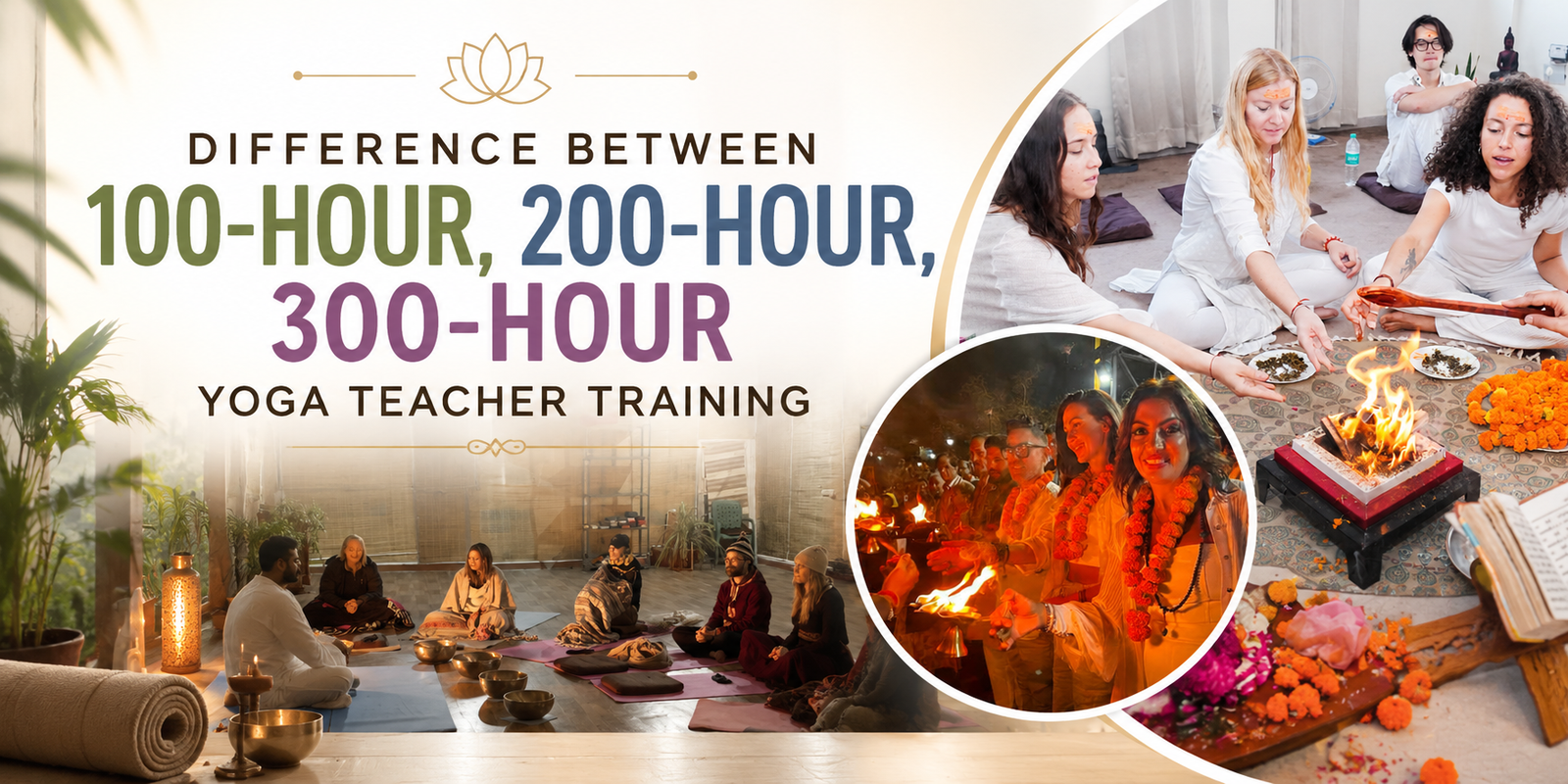
    100 hour YTT– 100 hour yoga teacher training course is a beginner-level course that provides basic yoga knowledge to students. The duration of the 100 hour YTT is 14 days, which is shorter than the other two courses.

    200 hour YTT– 200 hour yoga teacher training course is an intermediate-level course where you learn concepts like yoga philosophy. This course is the first stepping stone in your yoga instructor journey. The duration of a 200-hour YTT is 24 days.

    300 hour YTT– 300 hour yoga teacher training course is an advanced-level yoga teacher training where you learn the in-depths of yoga and its philosophy. The duration of a 300-hour YTT is 28 days, or a month.

    The practitioners who have completed their 200-hour YTT and 300-hour YTT are officially recognised as 500 hour yoga teacher training.

    What Do the “Hours” in 100, 200, and 300 Hour Yoga Teacher Training mean?

    The number in YTTC hours meaning yoga teacher training refers to the total number of contact hours of instruction covering asana practice, teaching methodology, anatomy, philosophy, and different forms of yoga that students receive throughout their yoga teacher training curriculum.

    This system was particularly established by the Yoga Alliance USA as the standard system to set a benchmark for all the yoga studios and yoga schools worldwide so that they can follow the guidelines for Yoga Alliance-certified teacher training without any clashes.

    When we look at 100 200 and 300 hour yoga teacher training difference, more hours generally mean more depth, more advanced techniques, and more teaching confidence,  but each level serves a different purpose in a teacher’s journey. Understanding this progression is the first step to choosing correctly, rather than picking a course simply because it’s the shortest or cheapest option available.

    100 Hour Yoga Teacher Training: The Foundation Course

    100 Hour Yoga Teacher Training is a foundational course to step into the journey of yoga. The students who are complete beginners and want to learn yoga.

    • Practitioners who want to learn yoga for self-improvement.
    • This is a complete beginner yoga teacher training course for those who cannot commit to a whole month.
    • Practitioners who are planning a short vacation of 7 to 10 days.

    Important note: A 100-hour YTTC is not a recognised course by the Yoga Alliance USA as a full teacher training certification. This course is, moreover, for self-improvement. You will get a certificate of participation, but you will not be qualified as a yoga teacher.

    200 Hour Yoga Teacher Training: The Global Standard

    200 Hour Yoga Teacher Training is the global standard set by the Yoga Alliance USA to qualify to become a yoga teacher. 200 hour YTTC is one of the most popular courses among the international students.

    • Practitioners who want to learn yoga to become yoga teachers or want to improve their own practices.
    • The beginning of the yoga teacher training journey starts with a 200-hour YTTC.
    • The duration of the course is 25 days. This is an intermediate-level yoga teacher training course.
    • You can teach yoga once you complete a 200-hour YTTC  with USA Yoga Alliance Certification.

    300 Hour Yoga Teacher Training:  Advanced yoga teacher training course

    300 Hour Yoga Teacher Training is an advanced yoga teacher training course. Once the practitioner completes a 200-hour YTTC and now wants to learn the depths of Yoga and its philosophy, this course will help them to discover it.

    • Practitioners who want to learn yoga practices and yoga philosophy in depth and want to dedicate their patience and energy to this process.
    • The duration of the 300-hour YTTC is 28 days, or a month, depending on the curriculum structured by the yoga school.
    • When combined together 200 hour + 300 hour = 500 hour yoga certification
    • 300 Hour Yoga Teacher Training will provide you with in-depth knowledge of yoga and its philosophy.

    These are some 100 200 and 300 hour yoga teacher training difference which will help clear our minds before starting the yoga teacher training journey. From beginners to advanced practitioners must understand the basic differences between the yoga courses.

    Curriculum Breakdown: What You Actually Study at Each Level

    When we look at 100, 200, and 300 hour yoga teacher training difference, we have to go through the curriculum to know what the yoga school is teaching. The duration of the courses may vary, but the hours of training will remain as the guideline provided by the USA Yoga Alliance.

    To make the differences in yoga teacher training curriculum concrete, here’s roughly how contact hours are distributed at each level:

    Subject Area 100 Hour 200 Hour 300 Hour
    Asana (technique & practice) 40–50 hrs 80–90 hrs 90–100 hrs
    Teaching methodology 10–15 hrs 25–30 hrs 30–35 hrs
    Anatomy & physiology 5–10 hrs 20–25 hrs 25–30 hrs
    Philosophy & lifestyle 10–15 hrs 25–30 hrs 35–40 hrs
    Practicum (supervised teaching) 5–10 hrs 10–15 hrs 30–40 hrs
    Pranayama & meditation 10–15 hrs 15–20 hrs 20–25 hrs

    100 200 and 300 hour yoga teacher training difference: Quick Comparison Table

    Feature 100 Hour 200 Hour 300 Hour
    Best for Beginners / personal practice / specialty add-on New teachers Certified teachers going deeper
    Yoga Alliance recognition Not standalone RYT-200 RYT-500 (with 200hr)
    Prerequisite None None Valid 200 Hour certificate
    Typical duration 7–10 days 21–25 days 25–30 days
    Focus Intro / specialty Foundational teaching Advanced teaching & specialization
    Can teach professionally? Generally no Yes Yes, at advanced level

    How much does yoga teacher training cost?

    The 100, 200, and 300 Hour Yoga Teacher Training cost may vary because of the thousands of yoga schools that are competing against each other in terms of cost. Cheaper does not always mean bad, and expensive does not always mean good. But the cost of yoga teacher training can vary according to the school.

    If we compare the cost of yoga teacher training in India with that from all over the globe, we can easily notice the difference. In India, yoga teacher training costs less than half the semester fees of a college in the USA.

    Yoga teacher training cost varies widely by country, school reputation, accommodation type, and course inclusions (meals, excursions, materials). As a general guide for programs in India, where training costs are notably lower than in the US, UK, or Australia:

    The 100, 200, and 300 Hour Yoga Teacher Training cost in India:

    100 hour YTTC : 100 Hour Yoga Teacher Training course fees can cost around $500 USD to $700 USD.

    200 hour YTTC : 200 Hour Yoga Teacher Training course fees can cost around $ 999 USD to $1200 USD.

    300 hour YTTC : 300 Hour Yoga Teacher Training course fees can cost around $ 1299 USD to $1500 USD.

    Career Paths After Each Certification Level

    The career paths after 100, 200, and 300 Hour Yoga Teacher Training :

    100 hour YTTC : After completing 100 Hour Yoga Teacher Training, you can improve your self-practice, but you are not qualified as a yoga teacher according to the USA Yoga Alliance Certification.

    200-hour YTTC : After completing 200 Hour Yoga Teacher Training, you can now play the role of a yoga instructor at gyms and yoga studios and can even start your own yoga classes.

    300-hour YTTC : After completing 300 Hour Yoga Teacher Training, you are now ready for the role of a qualified instructor for advanced or specialised classes, teacher-training assistant roles, retreat leadership, therapeutic/private 1-on-1 work, and senior positions at established studios.

    How to Choose the Right for 100, 200, and 300 Hour Yoga Teacher Training?

    You can choose the right yoga school in the following ways:

    • Yoga Alliance USA registration
    • Experienced, qualified faculty
    • Small class sizes
    • Clear curriculum breakdown
    • Genuine student reviews

    Frequently Asked Questions

    Can I go straight into a 300 Hour course without doing 200 Hour first?

    No. A 300 Hour program is an advanced course and requires a valid 200 Hour certification as a prerequisite.

    Is a 100 Hour certificate enough to teach yoga professionally?

    Generally no. Most studios and Yoga Alliance recognition require at least a 200 Hour (RYT-200) certification to teach independently.

    How long does a 200 Hour YTTC take to complete?

    Most in-person 200 Hour programs run for 21 to 25 days of immersive training, though online formats may be spread over several weeks.

    Do 100, 200, and 300 Hour Yoga Teacher Training need to be done at the same school?

    No. You can complete each level at different Yoga Alliance-registered schools, as long as each program is properly certified.

    How much does 100, 200, and 300 Hour Yoga Teacher Training cost in India compared to the West?

    Training in India, particularly in Rishikesh, is typically significantly


  • How to Choose the Best Yoga School In India

    How to Choose the Best Yoga School In India

    How to Choose the Best Yoga School In India: A Complete Guide

    India is not just a place where yoga was born. India is now a worldwide destination for the best yoga school in India among international students. Students and serious yoga practitioners from all around the world come to India for their yoga practices and studies. But “come to India to study yoga” has grown from a niche pilgrimage into a massive industry, and that growth has a downside. Due to the large number of schools and competition, many of them do not provide what they promised.

    Now the question is how to choose a yoga school in India? generally comes from students, especially from European countries and international yoga practitioners.

    This complete guide will help you choose the top yoga schools in India for yoga courses so that you can shortlist them according to your priorities. As a national or international student, you must have several questions regarding courses like the 200 hour teacher training certification, one of the most popular courses among all YTT courses. So begin your yoga journey with answers, not questions.

    Why Choose a Yoga School in India

    Let us begin with “why”, not “how”, to choose a yoga school in India. All of us know that yoga is rooted in India because of its origin. Yoga practices and its philosophy have been a part of Indian tradition for thousands of years. When it comes to choosing the best yoga school in India, you can have multiple options, but you must be aware of the fact that the environment of yoga in India cannot be replicated anywhere else in the world, nor can any yoga studio weekend classes offer authentic yoga learning around the world.

    An authentic yoga school India has many learned yoga instructors and teachers who have studied yoga to its core. International students around the world know that when it comes to begin their yoga journey as a beginner, what better than India, which carries the lineage of yoga and conducts the best yoga teacher training India, around the world.

    Rishikesh is known as a “yoga capital of the world”, and yoga practitioners who are chasing tradition and spirituality together can come to Rishikesh. Goa is famous among international students who want to mix styles from Vinyasa to Kundalini. In the south, Mysore is the birthplace of Ashtanga yoga, and the gold standard for that discipline. Kerala offers an infusion of yoga and Ayurvedic wellness traditions for a more holistic, health-focused experience. These are the reasons why we have the best yoga school in India, compared with all other countries around the world.

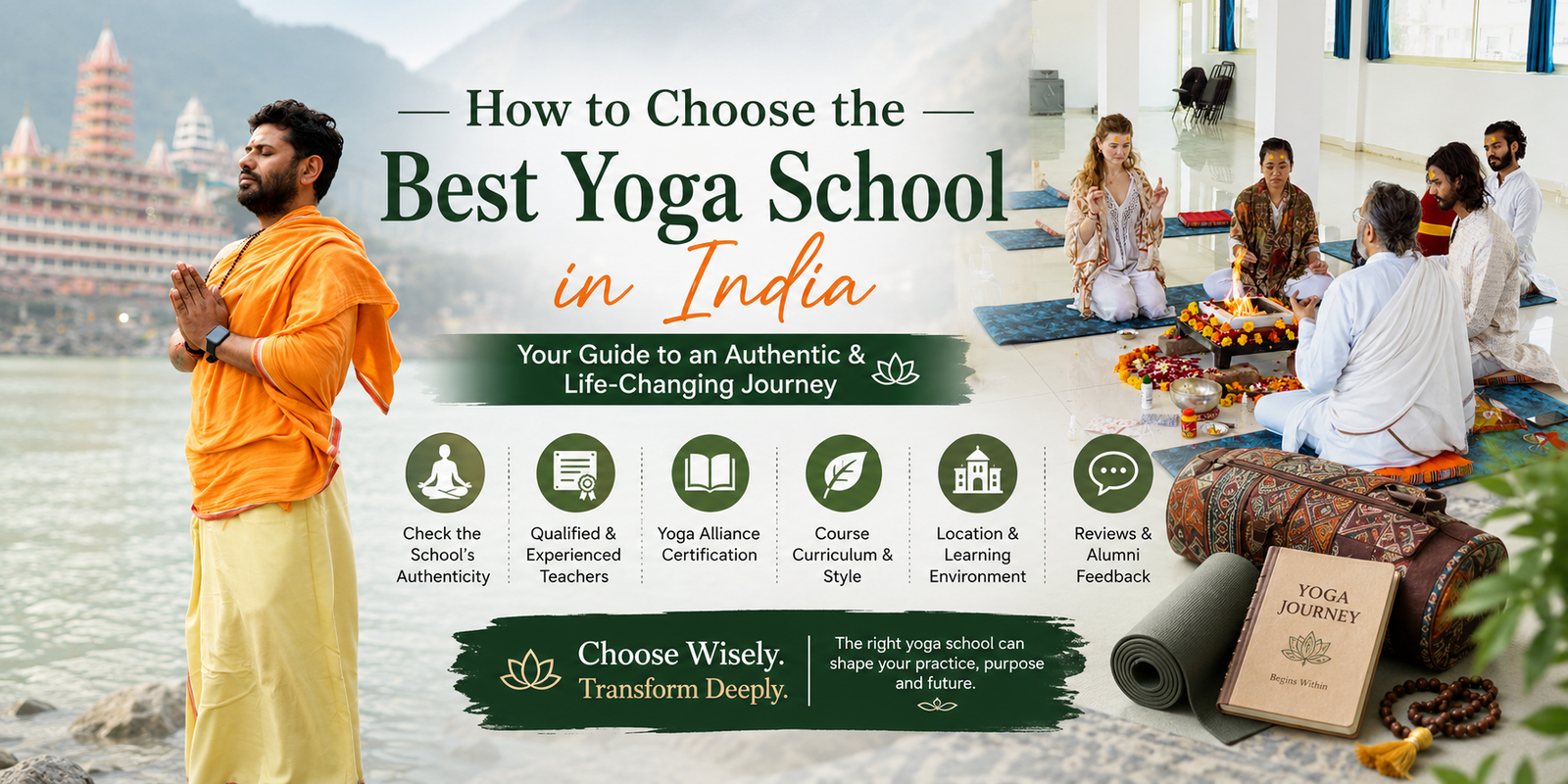
    Key Points to Consider When Choosing a Yoga School

    1. Accreditation and Certification

    If you are planning to teach yoga after teacher training, the accreditation matters the most. You must check that the yoga school is Yoga Alliance (the worldwide recognised yoga body) registered. While checking the list of the best yoga school in India, it takes more than just a registration. Yoga Alliance registration is to ensure that the yoga school is meeting the standards, curriculum, and teachers’ experience required to teach courses.

    But accreditation is not a magic quality stamp; it is a baseline. Many registered schools still take shortcuts. Use it as a filter, not as the final decision.

    2. The Teacher Experience and Lineage

    While on the journey to choose the best yoga school in India, the teacher experience is one of the most important factors.

    A yoga instructor or teacher must have the proper documents of their experience and practises.

    You must go through the websites of most of the top yoga schools in India and have uploaded the teacher’s bio on the website with complete information.

    The teacher must have complete experience in the form of yoga that you want to pursue, so choose accordingly.

    As an international student, those who are looking for the best yoga school in India for beginners should be clear about their goals and the form of yoga before enrolling. Check the teacher’s approach so that you do not have any confusion later.

    Now you must have an idea of tips for selecting the right yoga school in India for foreigners on the basis of the teacher’s experience and lineage.

    3. The Curriculum and Yoga Style

    Before enrolling, you must know that yoga is not the same everywhere. There are multiple forms and styles. So you must be clear about which form and style you want to choose. Some of the best yoga school in India offer you all the yoga forms listed below.

    • Hatha — slower-paced, foundational postures, great for beginners
    • Ashtanga — a fixed, physically demanding sequence
    • Vinyasa — flowing, breath-linked movement
    • Kundalini — energy-focused, incorporates chanting and breathwork
    • Iyengar — precision-focused, heavy use of props

    Select accordingly because the teacher doesn’t have to know all the required yoga styles you want to practice. Check these basic tips for selecting the right yoga school in India for foreigners.

    4. Class Size and Personal Attention

    A yoga class with 60 students sitting in a hall and practising yoga. Can you imagine the chaos? Or a class with 15 students getting one-on-one interaction with the teacher. You must always look for quality over quantity. The best yoga school in India is not the ones who trained thousands of students, but the one who made the best yoga instructors and teachers, who are now teaching thousands of students and transforming their lives to teach thousands more.

    Sriezaa Yogshala is one of the best yoga school in India, which has been transforming the lives of many students for many years with quality over quantity.

    5. Location and Environment

    You are always the reflection of your training. So the location and environment in which you are training yourself reflect your own personality. Nobody wants to learn in an environment having noises all around. One of the best yoga school in India will have the following factors.

    • Climate and season, because Rishikesh gets very hot in peak summer. So manage accordingly, especially for international students who are looking for the best yoga school in India for beginners.
    • Noise and crowding (tourist season versus off-season)
    • Proximity to nature is why many people choose India specifically for riverside or mountain settings that support a meditative headspace.
    • Accessibility is about how easy it is to get to and from the school, especially if you’re travelling solo.

    6. Accommodation and Food

    The food culture and the living space you are offering to your students after a long, exhausting day is also what makes you the best yoga school in India. As an international student who is travelling far away from their home, they also need the proper amount of rest and nutritious meals (meals are generally Sattvic) for recovery. A yoga courses in India generally takes around 25 to 28 days to complete. In between, rest and recovery is most important.

    • Room types and whether private rooms are available (often for an added cost)
    • Meal plans: most schools serve sattvic (pure, vegetarian) food as part of the yogic lifestyle.
    • Wi-Fi and laundry access, if that matters to you.
    • Whether the property has been recently reviewed or photographed (photos from five years ago often don’t reflect current conditions).

    These are a few tips for selecting the right yoga school in India for foreigners.

    7. Reviews and Alumni Testimonials

    When you call yourself the best yoga school in India, your work reflects. Google reviews, Yoga Alliance school directories, and Facebook alumni groups are goldmines.

    • Recent reviews (within the last 1–2 years)
    • Mentions of specific teachers by name
    • Do multiple reviewers describe the same strengths or the same problems?
    • Red flags like complaints about hidden fees, cancelled sessions, or unqualified substitute teachers.

    If possible, reach out to alumni directly. Most are willing to share honest impressions, especially in Facebook groups focused on yoga teacher training experiences.

    These are a few tips for finding the best yoga school in India for beginners.

    8. Cost and Value for Money

    The cost of the courses at the best yoga school in India is generally between $700 and $1500.

    Cheaper doesn’t always mean less, and expensive doesn’t always mean the best.

    Sometimes, when you enrol in a cheap course, the cost-cutting can be reflected in teachers, living spaces and food.

    These are a few tips for how to choose a yoga school in India and what it really needs to be the best yoga school in India.

    Tips for Foreign Students Before Enrolling

    • Visa: Most yoga students come in on a tourist visa. But do check the current requirements for your nationality as rules do change.
    • Health precautions: Consult your doctor about recommended vaccinations, and ask whether the school has ties to local clinics.
    • Cultural adjustment: Expect a slower pace, different food and a more communal living style than you may be used to as part of the experience, not a flaw in it.
    • Best time to visit: October through March offers the most comfortable weather in most regions, especially Rishikesh, which gets very hot from April through June.
    • Safety: Choose accommodations with good reviews specifically from solo travellers if you’re going alone, and let someone back home know your itinerary.

    Conclusion

    Choosing the best yoga school in India is an investment in your personal growth and lifelong wellness journey. By carefully considering factors like accreditation, teaching lineage, curriculum, class size, location, accommodation, and honest student reviews, you set yourself up for a truly transformative experience.

    Remember, the best yoga school in India is not just about prestigious names or beautiful locations; it’s about finding a place that aligns with your goals, values, and the kind of teacher and practitioner you aspire to become. Take your time, do your research, and trust your intuition as you embark on this meaningful path. India has a rich legacy of yoga waiting to welcome you and make your choice with clarity and confidence.

  • Wellness and Yoga Retreats for International Students

    Wellness and Yoga Retreats for International Students

    Wellness and Yoga Retreats for International Students: Benefits

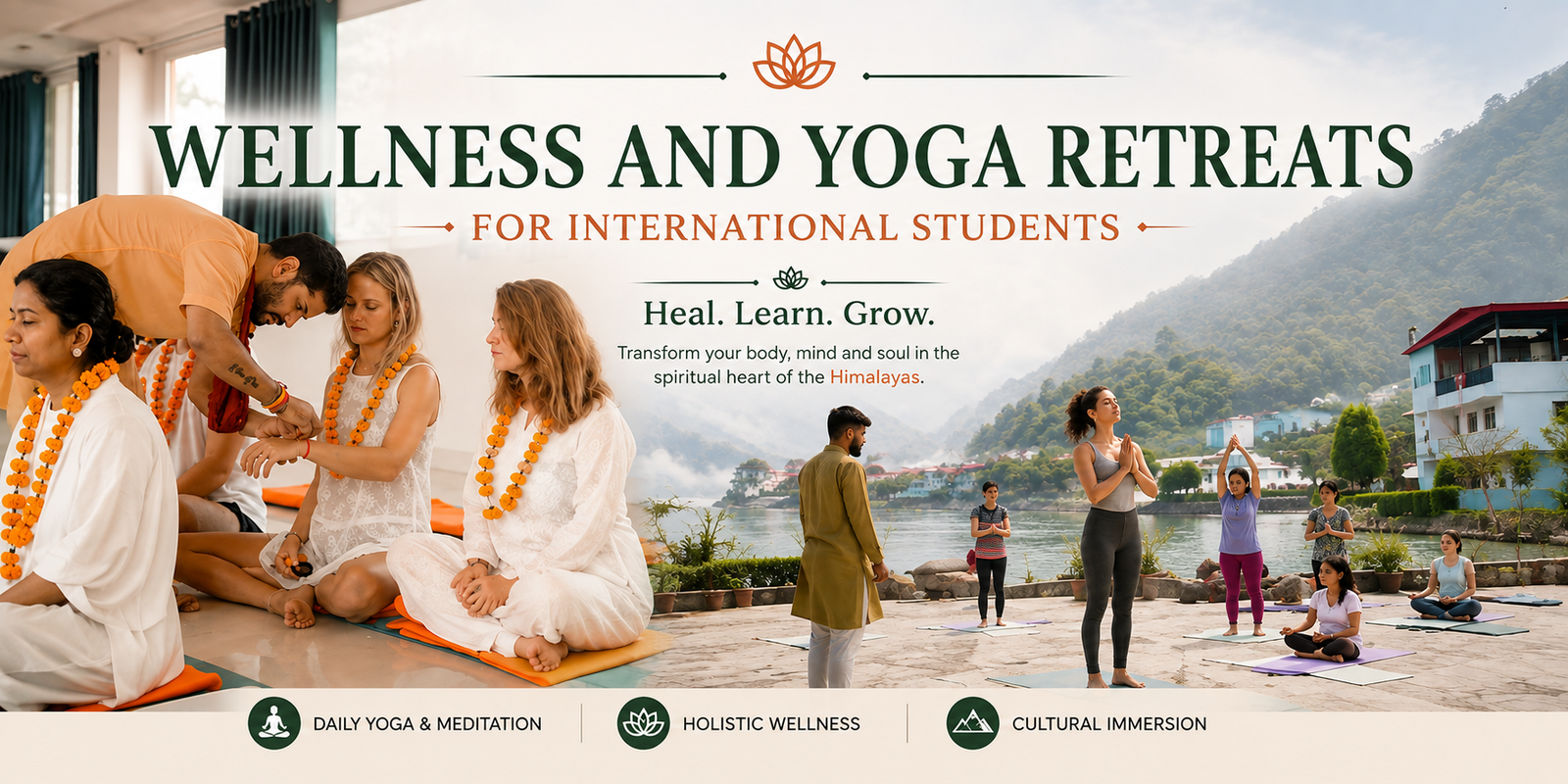
    Wellness and yoga retreats for international students offer a wonderful way to step away from busy routines, experience authentic yoga, and explore the spiritual and natural beauty of India. For students traveling from different countries, a retreat in Rishikesh or the Himalayas can be more than a short holiday. It can be an opportunity to slow down, learn traditional yoga practices, meet people from different cultures, and spend meaningful time in a peaceful environment.

    Rishikesh is one of the most popular destinations in India for people who want to experience yoga and meditation. Located beside the sacred Ganga River and surrounded by the Himalayan foothills, the city provides a unique setting for a wellness journey. Sriezaa Yogshala offers thoughtfully planned retreats for international students who want to combine yoga, meditation, cultural experiences, nature, and personal reflection during their stay in India.

    What Are Wellness and Yoga Retreats for International Students?

    A wellness and yoga retreat for international students is a short, structured program that combines yoga, meditation, relaxation, healthy food, cultural activities, and time in nature. These retreats are suitable for beginners as well as people who already have experience with yoga.

    Unlike a regular vacation, a yoga retreat gives you a chance to follow a simple daily routine. You can begin the morning with yoga and meditation, enjoy nutritious meals, explore local surroundings, and participate in activities that introduce you to Indian traditions.

    For international students, this type of retreat can also be a comfortable introduction to India. Instead of planning every part of the trip alone, participants can receive guidance about accommodation, local activities, transportation, and the retreat schedule.

    Whether you choose a Rishikesh retreat or a Himalayan experience, the goal is to create a balance between learning, relaxation, exploration, and self-reflection.

    Why Choose Rishikesh for a Yoga Retreat in India?

    Rishikesh has a special place in the history and practice of yoga. The city attracts students, travelers, spiritual seekers, and yoga practitioners from around the world.

    The peaceful surroundings of the Ganga, Himalayan foothills, temples, ashrams, and traditional yoga centers create an atmosphere that is different from a typical tourist destination.

    For international students, visiting Rishikesh can provide the chance to experience yoga in an environment where yoga philosophy, meditation, chanting, and spiritual traditions are part of everyday life.

    A retreat here can also give you time to explore the city while maintaining a structured wellness routine.

    Types of Yoga Retreats for International Students

    Sriezaa Yogshala provides different yoga retreat for International students who want to explore yoga and wellness in India.

    Rishikesh Yoga Retreat for International Students

    A Rishikesh yoga retreat for International students combines daily yoga and meditation with cultural and spiritual experiences. The program is designed for students who want a short wellness break while experiencing the atmosphere of the Yoga Capital of the World.

    A typical retreat may include yoga sessions, meditation, pranayama, sound healing, traditional ceremonies, Ganga Aarti, healthy vegetarian meals, and local excursions.

    The retreat allows participants to experience both the relaxing and cultural sides of Rishikesh without following an overly complicated schedule.

    Himalayan Yoga Retreat for International Students

    A Himalayan yoga retreat for International students offers a different experience. Instead of staying only in the city, participants travel toward the mountains and spend time closer to nature.

    The Himalayan retreat can include yoga, meditation, pranayama, nature walks, cultural activities, music, mantra chanting, self-reflection, and guided trekking experiences.

    For students who enjoy nature and adventure, this retreat provides an opportunity to combine wellness with the peaceful surroundings of the Himalayan region.

    Why Choose Sriezaa Yogshala for a Wellness Retreat?

    Choosing the right yoga school is important, especially when you are traveling internationally. A good retreat should provide a comfortable environment, clear information, experienced teachers, suitable accommodation, healthy meals, and proper guidance.

    Sriezaa Yogshala focuses on creating a simple and welcoming experience for international students. The retreat programs are designed to combine traditional yoga practices with cultural and wellness activities.

    Some of the reasons students may choose a retreat with Sriezaa Yogshala include:

    • Short 4-night and 5-day retreat programs
    • Yoga and meditation sessions
    • Comfortable accommodation
    • Vegetarian and sattvic meals
    • Cultural and spiritual experiences
    • Himalayan and local excursions
    • Sound healing sessions
    • Guidance from yoga teachers
    • Opportunities to meet students from different countries
    • A balance of relaxation, learning, and exploration

    The aim is not simply to fill your schedule with activities. It is to create enough space for you to slow down, learn, reflect, and enjoy the experience.

    What Is Included in a Rishikesh Wellness and Yoga Retreat?

    The Rishikesh retreat is planned as a 4-night and 5-day experience. It gives international students an opportunity to experience yoga, meditation, Indian traditions, and local culture.

    The program includes:

    • 4 nights of accommodation
    • Daily sattvic meals
    • Welcome drink, tilak, and flower mala
    • Fire ceremony or Havan
    • Ganga Aarti experience
    • Daily yoga and meditation sessions
    • Ayurveda doctor consultation
    • Trataka Kriya practice
    • Spiritual dance and bhajan session
    • Sound healing session
    • Local excursion

    These activities are designed to introduce participants to different aspects of traditional Indian wellness.

    What Is Included in the Himalayan Wellness Retreat?

    The Himalayan retreat takes the experience beyond Rishikesh and into the mountains. It is designed for international students who want to combine yoga with nature, culture, and adventure.

    The program includes:

    • 4 nights of accommodation
    • Stay at a Himalayan village and base camp
    • Transportation from Rishikesh to the Himalayan region and return
    • Daily yoga, meditation, and pranayama
    • Organic vegetarian meals
    • Guided Tungnath Temple trek
    • Sacred fire ceremony
    • Sound healing sessions
    • Nature walks
    • Cultural experiences
    • Story writing and self-reflection activities
    • Music, Kirtan, and mantra chanting
    • Welcome ceremony with tilak and flower mala
    • Evening soul talks and community gatherings

    The Himalayan retreat is especially suitable for students who want to disconnect from busy surroundings and spend more time in nature.

    5 Benefits of Wellness and Yoga Retreats for International Students

    1. Learn Yoga Beyond Physical Asanas

    Yoga is more than stretching and physical postures. A Yoga Retreats for International Students can introduce you to meditation, pranayama, yoga philosophy, mantra, mindfulness, and other traditional practices.

    For international students who are new to yoga, this can provide a deeper understanding of why yoga has become an important part of Indian culture.

    2. Take a Break From a Busy Routine

    University life, work, travel, and daily responsibilities can leave little time for rest. A short retreat provides an opportunity to step away from that routine.

    Morning yoga, meditation, healthy meals, nature walks, and quiet time can help create a calmer daily rhythm.

    3. Experience Indian Culture

    One of the biggest advantages of traveling to India for a retreat is the opportunity to experience local traditions.

    Activities such as Ganga Aarti, Havan, chanting, Kirtan, and traditional welcome ceremonies allow international students to experience aspects of Indian culture in a meaningful setting.

    4. Meet People From Different Countries

    Yoga retreats often bring together people with different backgrounds and experiences. International students can meet new friends, share stories, and learn about different cultures.

    This creates a sense of community and can make traveling alone feel more comfortable.

    5. Create Time for Self-Reflection

    A retreat can give you space to think about your goals, habits, interests, and future plans.

    Activities such as journaling, meditation, nature walks, and evening discussions encourage participants to slow down and reflect.

    The experience may be short, but the lessons and memories can stay with you long after you return home.

    What Makes a Yoga Retreat Different From a Normal Vacation?

    A normal vacation often focuses on sightseeing, entertainment, and relaxation. A yoga retreat combines these elements with a structured wellness routine.

    You can still explore the destination, meet people, enjoy local experiences, and have fun. However, the retreat also gives you time to practice yoga, meditate, eat healthy food, and learn about yourself.

    This balance makes a retreat particularly useful for international students who want their holiday to have a meaningful purpose.

    Things to Know Before Joining a Yoga Retreats for International Students.

    The students who all want to join Yoga Retreats for International Students, should make a few preparations before traveling to India for a retreat.

    Check Your Travel Documents

    Make sure your passport, visa, travel insurance, and other required documents are valid before departure. Check the latest official travel requirements for your nationality.

    Confirm Your Retreat Details

    Before booking, confirm the retreat dates, accommodation, meals, transportation, activities, and arrival arrangements with the yoga school.

    Pack According to the Season

    Weather can vary between Rishikesh and the Himalayan areas. If you are traveling into the mountains, carry suitable warm clothing, comfortable walking shoes, and basic personal items.

    Keep Some Personal Spending Money

    Even when accommodation and meals are included, it is useful to keep some additional money for personal expenses, shopping, local transport, or unexpected needs.

    Keep a Journal for Yoga Retreats for International Students.

    A small notebook can make your retreat more meaningful. You can write about your yoga practice, experiences, thoughts, goals, and memorable moments.

    Who Can Join These Yoga Retreats?

    These retreats can be suitable for international students, beginners, travelers, working professionals, and anyone interested in yoga and wellness.

    You do not necessarily need advanced yoga experience to participate. Beginners can learn basic practices under guidance, while experienced practitioners can use the retreat as an opportunity to reconnect with their practice.

    If you have specific physical limitations or concerns, discuss them with the yoga school before joining the program.

    Begin Your Wellness Journey in Rishikesh

    A  yoga retreat for international students can be a meaningful way to experience India while taking time for your physical, mental, and personal well-being. From morning yoga and meditation in Rishikesh to peaceful walks in the Himalayas, the experience brings together traditional practices, nature, culture, and community.

    Sriezaa Yogshala offers yoga retreat for International students designed to help international students experience yoga in a supportive and welcoming environment. Whether you choose the 4-night Rishikesh retreat or a Himalayan retreat, you can expect a combination of yoga practice, meditation, healthy food, cultural activities, and time for reflection.

    A retreat does not need to be about doing more. Sometimes, it is about slowing down, breathing deeply, learning something new, and giving yourself time to reconnect.

    If you are planning a wellness vacation in India, Rishikesh and the Himalayas offer a memorable setting for your journey. Come with an open mind, experience the roots of yoga, meet people from around the world, and take home more than memories a deeper appreciation for wellness, culture, and yourself.

    Frequently Asked Questions

    How long is the Yoga Retreats for International Students.?

    The Rishikesh Yoga Retreats for International Students is planned as a 4-night and 5-day program.

    Do I need previous yoga experience for Yoga Retreats for International Students?

    No. Beginners can participate in Yoga Retreats for International Students., and the practices can be adapted according to individual experience and comfort in Yoga Retreats for International Students.

    Are meals included in Yoga Retreats for International Students.?

    Yes. The Yoga Retreats for International Students programs include vegetarian or sattvic meals as described in the respective retreat package.

    Is accommodation included in Yoga Retreats for International Students.?

    Yes. Accommodation is included for the Yoga Retreats for International Students..

    Can international students join the Himalayan retreat?

    Yes. The Himalayan Yoga Retreats for International Students is designed for international participants who want to combine yoga, wellness, nature, and cultural experiences.

    What should I bring to as a student for Yoga Retreats for International Students.?

    As a student for Yoga Retreats for International Students you should carry comfortable yoga clothing, personal toiletries, a reusable water bottle, suitable footwear, a small day bag, and weather-appropriate clothing are useful. For Himalayan travel, warmer clothing is recommended.

  • Yoga Teacher Training For United States

    Yoga Teacher Training For United States

    Yoga Teacher Training For United States Students 


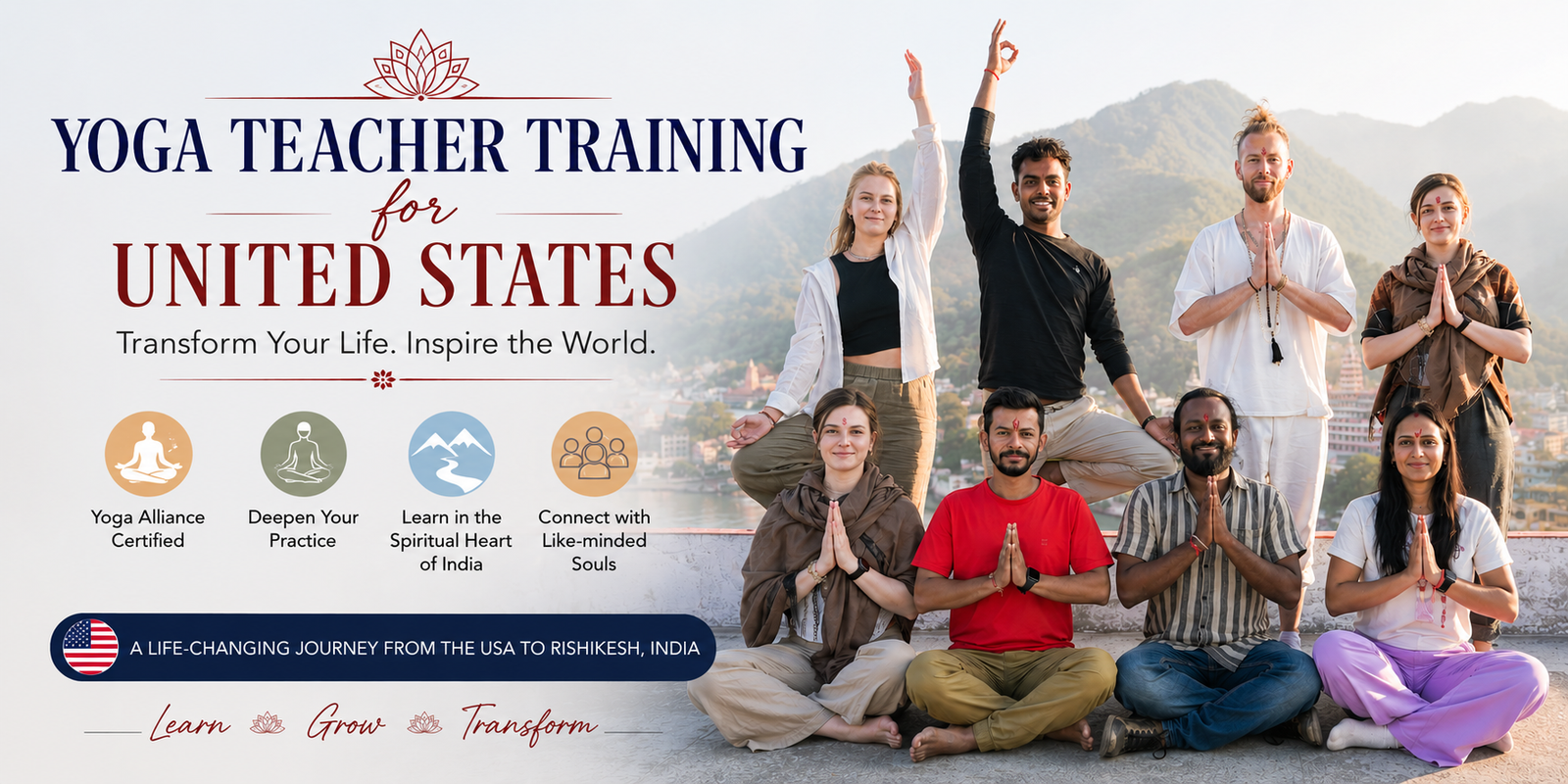
    If you are planning to do yoga in India while living in the United States, you must be thinking of what yoga teacher training for United States students offers. You must have several questions regarding yoga teacher training in India. 

    This informative blog will address your concerns, such as is yoga teacher training in India safe for US students, e-visa for yoga course in India for US citizens, the best yoga teacher training school in India and many more.

    This yoga teacher training for United States guide answers all of that plainly, honestly, and without the fluff. Whether you’re a yoga student looking to deepen your practice in yoga or an instructor ready to get your RYT 200 certification India recognized in US

    Here’s what you need to know before you book a flight for a yoga teacher training India to know more deeply about yoga.

    Why Do United States Students Choose India for YTTC : A Complete Guide

    The reason why United States Students Choose India for yoga teacher training is that:

    • Yoga originated in India thousands of years ago, and that history is exactly why so many people in the United States choose to complete their beginner-level 200 hour yoga teacher training India right where it all began.
    • Authentic and the best yoga teacher training schools around the world.
    • The cheapest yoga teacher training abroad vs USA, as the cost of YTTC in India often costs less than a single semester of community college in the US.
    • Distraction-free environment, as being away from home means fewer distractions.
    • Yoga teacher training for United States people for a full 200 hour certification, including tuition, accommodation, and meals, is much more affordable. 

    Benefits of  yoga teacher training  for United States students :

    • Authentic Source of Learning
    • Experienced, Traditional Teachers
    • Deeper Understanding of Yoga Philosophy
    • Globally Recognized Certification
    • Smaller Class Sizes, More Personal Attention
    • A Reset From Routine
    • The best yoga teacher training abroad for Americans

    What are the visa requirements for the United States?

    The Indian government offers an e-visa for yoga course in India for US citizens, and United States citizens are eligible to apply entirely online.

    A few tips for yoga teacher training  for United States students :

    • Apply for an e-visa at least a week before departure.
    • Course confirmation and accommodation should be confirmed before you leave.
    • A standard e-visa allows you to stay long enough to complete your 300 hour and 200 hour yoga teacher training India.
    • A standard e-visa also provides you with a few extra days to travel afterwards.
    • Double-check the current visa category and validity on the portal, because rules can be updated. 

    How much does YTTC cost in India in USD?

    As the USA works on dollars, not rupees, here is your breakdown of what yoga teacher training India cost in USD for Yoga teacher training for United States :

    • 200-hour YTTC: 200 hour yoga teacher training India costs roughly $900–$1,500, all-inclusive (tuition, shared accommodation, three meals a day, study materials).
    • 300-hour YTTC: roughly $1,100–$1,800
    • International flights: $700–$1,400 round trip from major US cities, depending on season and airline.
    • Extras: budget $100–$200 for personal spending, excursions, and incidentals.

    Compared with the USA 200-hour YTTC, which costs around $2,500–$4,000 without room, board, or the life experience of training abroad.

    Travelling to India: safety concerns regarding YTTC 

    The question is, is yoga teacher training in India safe for US students? This is the question parents in the United States ask more than anyone else, and it’s a fair one. And the answer to this question is: 

    • Many students from around the world come to India to complete their 200 hour yoga teacher training India, and even more advanced courses in yoga. Many of them are solo female travellers, and no such incident has been reported so far. 
    • A school with a good reputation will be at your arrival at the airport or will be guided by a local guide with transportation to Yoga school.
    • A daily routine with filtered drinks, clean accommodation and fully nutritious meals will be provided by the school, which is the most important concern as a foreign student.
    • The best yoga schools in India for yoga teacher training for United States students focus only on the authentic learning of yoga with a strict schedule, full safety measures and no nightlife. 
    • Standard advice applies: register your trip with the US State Department’s STEP program, get travel insurance that covers medical evacuation, and keep digital copies of your passport and visa.

    Will Your Certification Be Recognised in the US?

    The questions regarding the  yoga teacher training India United States students regarding the RYT certification in India recognised in the US:

    • Yes, as long as the school is USA Yoga Alliance registered and certified.
    • Yoga Alliance is the only credential body in the USA that accredits studios, gyms and insurance providers.
    • Yes, RYT 200 certification India recognized in US if the yoga school is  USA Yoga Alliance registered.
    • The yoga certification India valid in USA  carries the same RYT-200 or RYT-300 designation as one earned in the US if the school is USA Yoga Alliance registered.

    For assurance, kindly check these points:

    • Check the Yoga Alliance Registration number on the US Yoga Alliance portal. 
    • Go through the website of the yoga school, which will give you an idea of what the school offers.
    • Before enrolling in any yoga school for a 100-hour or 200 hour yoga teacher training India, check the reviews and experience of the students who completed their  YTTC in the school.


    What to Pack and How to Prepare?

    No need to pack heavy and extra items; prepare according to what the yoga school instructed for your yoga teacher training in India.

    Tips for packing and preparing for yoga teacher training in India:

    • Lightweight, breathable layers
    • Reusable water bottle
    • Small first aid kit
    • Modest clothes for temples visits
    • A journal
    • Open mind for food, as yoga school serves Sattvic food
    • Prepare your mind for a transformation journey.

    How to Choose the Right School for YTTC?

    Before enrolling on yoga teacher training for United States students, check:

    • Yoga Alliance USA accreditation
    • Batch size should be small.
    • Transparent curriculum 
    • Verified reviews 
    • Clear inclusions 

    Why choose Sriezaa Yogshala for yoga teacher training?

    The reason to choose Sriezaa Yogshala for your yoga teacher training in India 

    • Sriezaa Yogshala is for yoga teacher training abroad for Americans and is one of the best yoga teacher training schools in India.
    • USA Yoga Alliance-registered yoga school.
    • Offers the best 100, 300 and 200 hour yoga teacher training 
    • Provides special courses like Yin, Prenatal & Postnatal, Aerial, Acro, and Kundalini yoga.
    • Focuses on quality, not quantity. Small batches with quality learning.
    • A sattvic kitchen, Vedic-designed system with a large dining hall.
    • Open garden for walking and yoga practices.
    • Provides the best yoga retreat India for Americans 

    The best YTTC schools across India which provides the best yoga teacher training course. The best 200 hour yoga teacher training for United States students across the globe.

    Conclusion 

    Now you have an idea about yoga teacher training for United States students

    Through this guide, students who are planning for their yoga teacher training, especially from the United States, are aware of the e-visa process, safety, course cost, certification and preparation list. Sriezaa Yogshala welcomes you all.

    Frequently Asked Questions

    Do I need a visa to attend yoga teacher training in India from the United States??

    Yes. Most students from the United States apply for an e-Visa online, which covers short-term programs like yoga courses. Check current requirements on the official government portal before booking flights.

    How much does yoga teacher training in India cost for US students?

    A 200-hour program typically costs $900–$1,500 all-inclusive, and a 300-hour program runs $1,100–$1,800, covering tuition, meals, and shared accommodation.

    Is my certification valid for teaching yoga in the United States?

    Yes, as long as the school is Yoga Alliance USA certified. This gives you the same RYT-200 or RYT-300 credential recognized by US studios and insurers.

    Is it safe for a solo traveler to attend yoga teacher training in India?

    Yes, thousands of solo travelers, including many women, complete training safely each year. Choosing a reputable, residential school with airport pickup and a structured daily routine adds an extra layer of safety.

    What should I eat during yoga teacher training in India?

    Most programs serve a sattvic diet  vegetarian, freshly prepared, and easy to digest  designed to support your practice and study rather than weigh you down.


  • 10 yoga teacher training questions Every Yoga Teacher Training Student Asks

    10 yoga teacher training questions Every Yoga Teacher Training Student Asks

    Yoga Teacher Training Questions: 10 Essential Honest Answers

    The decision to become a yoga teacher must sound fascinating, imagining yourself on the banks of the Holy River Ganga, but before enrolling yourself, you must be aware of these yoga teacher training questions as a student.

    Becoming a yoga teacher is not a very easy task. The questions to ask before yoga teacher training are one of the primary tasks for all students. When you go for your first yoga teacher training for beginners course, you might feel that everything you learned before has just completely vanished from your brain. Your mind becomes like an empty vessel here, where your yoga teacher training actually starts.

    Bhagavad Gita (Chapter 7, Verse 2) states that.

    True and complete knowledge is not something that can be understood merely through the intellect. It becomes real only when it is directly experienced in the seeker’s life.

    The person who receives and realises this divine knowledge and wisdom bestowed by God awakens inwardly and comes to know the highest truth of life. After attaining this realisation, nothing else remains to be sought or known.

    Every single person who has ever enrolled in a yoga teacher training has sat exactly where you’re sitting now: excited, a little nervous, asking throughout the internet how to choose a yoga teacher training program and full of questions to ask before yoga teacher training even begins. This blog will tell you about 10 questions to ask before yoga teacher training enrollment.

    Think of it as the honest, no-fluff yoga teacher training FAQ you wish someone had handed you before you signed up.

    Do I Need to Be “Advanced” to Start Yoga Teacher Training?

    This is the most common questions to ask before yoga teacher trainings, and the biggest myth: that you need advanced experience before you can begin. A beginner-level YTTC exists precisely to introduce you to the fundamentals anatomy, alignment, breathwork, and philosophy, taught from the ground up. Most instructors actually prefer students who keep asking yoga teacher training questions while conducting the orientation.

    What Is the Difference Between a 200-Hour and a 300-Hour Course?

    200-hour certification is the foundational credential recognised by Yoga Alliance and studios worldwide. It covers the essentials: asana, breathwork, basic anatomy, teaching methodology, and philosophy. Once you complete it, you are eligible to move on to a 300-hour advanced course, which explores yoga and its philosophy in far greater depth. Together, the two add up to the 500-hour credential, the most advanced level of certification available.

    How Much Does It Cost?

    One of the most frequently asked yoga teacher training questions is program fees which may vary by location, format, and the reputation of the school not necessarily by quality. A small studio can offer just as transformative an experience as a large retreat centre. One of the better pieces of advice for yoga teacher training for beginners: choose a school for the depth of its teaching, not the size of its pool. Let your knowledge be the luxury, not the accommodation.

    Is Yoga Teacher Training Hard?

    Yes, honestly. It is demanding in ways that surprise most first-timers, and rewarding in ways that are hard to describe until you have lived them. Physically, long practice sessions and unfamiliar postures will leave you fatigued. Mentally, absorbing hours of theory, Sanskrit terminology, and teaching methodology can be exhausting. Emotionally, healing-focused sessions can bring up more than you expect. Experienced faculty are there to guide you through all three, and research on yoga’s physical and mental effects backs up why the process can feel so intense in the beginning.

    How Do I Choose the Right Program?

    Thousands of schools offer different facilities, comfort levels, and price points, but a good program is not about luxury it is about depth of teaching and a safe container for growth. Before enrolling, ask yourself the following five questions:

    • Is the school Yoga Alliance registered?
    • Who is the lead trainer, and what is their teaching style?
    • What is the class size?
    • What exactly is included in the fee?
    • Does the schedule realistically fit your life?

    What Are the Prerequisites?

    Most prerequisites are about mindset more than credentials. Common expectations include six to twelve months of consistent personal practice, basic familiarity with common poses and their Sanskrit names, and genuine curiosity about yoga philosophy rather than just the physical practice. A few advanced or specialised trainings may ask for a letter of recommendation, but for most 200-hour programs, enthusiasm and commitment count for more than experience.

    Will I Actually Have to Teach?

    Yes  and this is usually the part students worry about most. Teaching practice is built into nearly every certification program. You will typically practice teaching short segments to peers early on, build up to leading full classes by the end, receive real-time feedback from trainers and classmates, and learn to give hands-on adjustments and verbal cues. By graduation, teaching starts to feel natural, mostly because of the supportive community around you.

    Do I Have to Teach Full-Time After Certification?

    Absolutely not, and this might be the most freeing answer on this list. Many students complete their training with no intention of teaching publicly. They come for a deeper personal practice, a better understanding of anatomy and breathwork, personal growth, or tools to bring mindfulness into another career entirely physical therapy, corporate wellness, or simply parenting. If you do want to teach, that is wonderful too, but the training holds its own value either way.

    What Happens After Graduation?

    This is where the real benefits show up. Most graduates start by subbing or assisting classes at their home studio, offer donation-based classes to build confidence, apply for studio positions or build a private client base, and continue learning through workshops, specialty certifications, or a 300-hour program.

    Final Thoughts on These Yoga Teacher Training Questions

    If there is one thing every graduate wishes they had known going in, it is this: you do not need to have it all figured out before you start. Expect unexpected physical, mental, and emotional challenges. The community you build often matters as much as the certificate itself. Journaling helps process everything you are learning. Doubt midway through is common, and most students are glad they pushed through. You will graduate not just as a teacher, but with a new perspective on your own practice. If you only bookmark one list of yoga teacher training questions before enrolling, make it this one.

    FAQ

    How long does yoga teacher training take?

    Most 200-hour programs run four to twelve weeks part-time, or three to four weeks if immersive and full-time. Online, self-paced options can take anywhere from a few months to a year, depending on how quickly you move through the material.

    Can I do yoga teacher training online?

    Yes. Many Yoga Alliance-registered schools now offer fully online or hybrid programs that combine online study with an in-person intensive. Confirm the certification is recognised where you plan to teach, since some studios require a portion of in-person hours.

    What age do you have to be to start yoga teacher training?

    Most programs require students to be at least 18 years old. There is no upper age limit people begin teacher training in their 20s, 40s, and 60s alike.

    Do I need liability insurance after I graduate?

    Yes, most studios require teachers to carry liability insurance before they can lead classes. It is usually inexpensive, often under $200 a year, and can typically be arranged through Yoga Alliance or a specialised insurance provider once you are certified.

    Can I teach yoga without completing a 200-hour certification?

    Technically, yoga is not a federally regulated profession, so there is no legal requirement to be certified. However, almost all studios, gyms, and liability insurers require a Yoga Alliance-recognised 200-hour certification before they will hire or insure you.

    What is the difference between Yoga Alliance registered and non-registered training?

    A Yoga Alliance registered program (RYS 200) meets a set curriculum standard and lets you register as an RYT after graduating. Non-registered training can still be high quality, but the certification may not be as widely recognised by studios or employers.

    Will yoga teacher training change my personal practice?

    Almost universally, yes. Most graduates say their practice becomes slower, more intentional, and far more rooted in understanding why a pose or breath technique works, rather than just performing it.

  • Science Backed Yoga Benefits: Researched Guide

    Science Backed Yoga Benefits: Researched Guide

    20 Shocking benefits of yoga Backed by Science: Researched Guide 

    In this article, you will be shocked to know 20 Shocking benefits of yoga backed by Science. Modern science, who used to believe that yoga is just a part of “stretching”, has now changed its view and begun to study yoga under a microscope. After years of study, science-backed yoga benefits and its amazing results on our physical, emotional and mental health. 

    Yoga is a journey of thousands of years, even when the yoga mats did not exist. Classical texts like the Patanjali Yoga Sutras, the Bhagavad Gita and the 8 Philosophies of Yoga are known as (Ashtanga). The benefits of yoga have been noted down over the centuries, but now science has revealed the facts about the impact yoga can have on your physical, emotional and mental health.

    When Science met Yoga: Ancient wisdom to Modern Calculations

    What used to be dismissed as “just stretching” is now backed by peer-reviewed studies of the physical benefits of yoga, showing measurable changes in blood pressure, inflammation markers, brain structure, and mental health outcomes. 

    • Andrew Weil (Founder of the Arizona Centre for Integrative Medicine). According to Weil, yoga benefits both body and mind and helps reduce chronic stress.
    • Bessel van der Kolk ( Author of The Body Keeps the Score). He views yoga as a useful complementary therapy rather than a replacement for evidence-based mental health treatment.
    • Herbert Benson ( Harvard cardiologist, Founder of the Mind-Body Medical Institute). His view on Yoga: “The relaxation response is the opposite of the stress response.”

    In this article, we break down 20 shocking, science-backed benefits of yoga, scientifically supported advantages of yoga in this post, ranging from mental fortitude to physical well-being. These results may persuade you to open your mat right now, regardless of your level of experience.

    Do you know what the scientifically proven benefits of yoga are for mind and body?

    1. Lowers Blood Pressure

    Several scientific and clinical evidence showed physical benefits of yoga, especially for people suffering from hypertension, help reduce systolic and diastolic blood pressure. The combination of controlled breathing through the practice of Pranayama has shown better results in calming down the nervous system.

    1. Improves Heart Health

    The benefits of yoga have been linked with improving cardiovascular health. It helps in lowering cholesterol levels, which directly impacts the heart and can cause heart related diseases. Some research suggests it may be as effective as aerobic exercise for certain heart-health outcomes when practised consistently.

    1. Reduces Chronic Inflammation

    Diabetes, heart disease, and depression are all associated with chronic low-grade inflammation. Regular yoga practitioners with the science-backed yoga benefits typically exhibit lower levels of inflammatory indicators like C-reactive protein than non-practitioners, according to studies.

    1. Increases Flexibility and Joint Mobility

    This one isn’t shocking, but the degree of improvement is how the physical benefits of yoga work. Research and studies show measurable increases in range of motion after just eight weeks of consistent practice, benefiting people with arthritis and chronic joint stiffness.

    1. Builds Functional Strength

    There are several physical benefits of yoga. The plank, chair, and warrior series poses work several muscular groups at once. Without the use of external weights or professional gyms, studies on yoga practitioners demonstrate increased muscle strength and endurance, especially in the upper body and core.

    1. Supports Better Balance and Reduces Fall Risk

    One of the benefits of yoga is that balance-focused yoga poses have been shown to reduce fall risk in older adults significantly. This has made yoga a recommended addition to fall-prevention programs for seniors.

    1. Eases Chronic Back Pain

    Multiple randomised controlled trials have found yoga to be as effective as physical therapy for reducing chronic lower back pain, with benefits often lasting well after the study period ended.

    1. Improves Respiratory Function

    Pranayama (breathing exercises) has been shown to increase lung capacity and improve oxygen efficiency, benefiting people with asthma and other respiratory conditions.

    1. Regulates Blood Sugar Levels

    Studies on people with type 2 diabetes show that yoga can improve fasting blood sugar and HbA1c levels, likely due to its effects on stress hormones and insulin sensitivity.

    1. Enhances Immune Function

    Research has found that yoga practice is associated with changes in gene expression related to immune response, including reduced markers of cellular stress.

    How does yoga for mental health reduce stress?

    1. Reduces Symptoms of Anxiety

    As the studies done by one of the most researched areas on yoga for mental health, meta-analyses have found that practices of yoga for anxiety and depression result in reducing the symptoms of anxiety in human beings. 

    1. Lowers Cortisol (the Stress Hormone)

    The yoga for stress relief has been shown to reduce circulating cortisol levels after just a single session, and the effect becomes more pronounced with regular practice. When we practice yoga daily, it improves our mental health problems and even balances our emotions too.

    1. Improves Symptoms of Depression

    Clinical trials of the benefits of yoga for mental health show that yoga, particularly when combined with conventional treatment, can reduce depressive symptoms, likely through its effects on the vagus nerve and GABA levels in the brain. Yoga is also important from the perspective of transmitting positive energy.

    1. Increases GABA Levels in the Brain

    Brain imaging studies have found that a single session of yoga for stress relief can increase GABA levels, a neurotransmitter associated with calm and reduced anxiety, more than comparable walking exercise. The brain needs rest, and yoga for mental health is one of the prime ways to give your brain a simple call that it’s time to rest. 

    1. Enhances Emotional Regulation

    Emotions are triggered by past traumas and make one suffer from anxiety and depression. The practice of yoga for anxiety and depression has shown results when used in combination with medical treatment. 

    1. Improves Sleep Quality

    Research on insomnia patients shows that yoga for mental health can improve sleep onset time, total sleep duration, and overall sleep quality, often rivalling the effects of sleep medication in mild cases. Yoga Nidra is one of the postures that is practised by practitioners for better sleep, which reduces stress and lowers stress hormones. 

    1. Increases Grey Matter in the Brain

    One of the major benefits of yoga for mental health has been shown in MRI studies on long-term yoga practitioners, which show increased grey matter volume in areas linked to memory, attention, and emotional processing compared to non-practitioners.

    1. Boosts Focus and Cognitive Performance

    The studies of yoga for mental health measuring attention span and reaction time found improvements after short-term yoga interventions, likely linked to reduced mental fatigue and improved oxygenation of the brain.

    1. Reduces Symptoms of PTSD

    Trauma-sensitive yoga has shown measurable reductions in PTSD symptom severity in clinical trials, particularly among veterans and survivors of interpersonal trauma.

    1. Slows Cellular Ageing

    Perhaps the most shocking finding of the benefits of yoga for mental health research measuring telomere length (a biological marker of ageing) found that long-term yoga and meditation practitioners had longer telomeres than non-practitioners of the same age, suggesting a potential link to slower cellular ageing.

    How Much Yoga Do You Actually Need to See Results?

    One of the common misconceptions is that you need an hour-long daily practice to see any real benefits of yoga . The science-backed yoga benefits research tells a different story. Several studies used interventions of yoga for mental health just for 20–30 minutes, three to five times a week, and still recorded measurable improvements in cortisol levels, blood pressure, and mood within 8 weeks. For beginners, this is good news: consistency matters more than duration or intensity. 

    You need time to heal your mental traumas, and yoga for mental health gives you an exact loop to make your way out. Apart from these physical benefits of yoga, which have been proven even by medical science, regular practice of yoga with proper treatment provided to patients can improve their health.

    Which Style of Yoga Is Best for Which Benefit?

    Not all yoga styles produce the same effects, and matching the style to your goal can make a real difference. There are various styles of yoga that exist, and some practices provide the physical benefits of yoga, others focus on yoga for mental health.

    • Hatha and Restorative Yogayoga for stress relief, better sleep, and lowering cortisol. Slower pace, longer holds, more suitable for beginners and those managing anxiety.
    • Vinyasa and Power Yoga — better suited for physical benefits of yoga, building strength, improving cardiovascular fitness, and boosting mood through more vigorous movement. 
    • Yin Yoga — most effective for improving flexibility and joint mobility, since poses are held for several minutes to work deeper connective tissue.
    • Trauma-Sensitive Yogascience-backed yoga benefits specifically designed and studied for PTSD symptom reduction, with an emphasis on choice, safety, and body awareness rather than achieving a “perfect” pose.
    • Pranayama-focused practices — most closely linked to improved lung capacity, reduced anxiety, and better emotional regulation, since breath control directly influences the nervous system.

    Conclusion: 20 Shocking Benefits of Yoga Backed by Science

    Research shows that the benefits of yoga are far more than merely stretching, regardless of how long you’ve been practising. Strong science-backed yoga benefits data supports it for both mental and physical health. Regardless of age, experience, or level of fitness, yoga has something to offer everyone; yoga for stress relief helps lower blood pressure and inflammation, to enhance sleep, cognition, and emotional resiliency. Starting and maintaining consistency, even if it’s only for a few minutes each day, is the most crucial stage. Science demonstrates that even the tiniest effort can produce genuinely revolutionary outcomes. Now that you are aware of these 20 benefits supported by science, why not incorporate yoga into your daily practice and see the results for yourself?

    exhibit lower levels of inflammatory indicators like C-reactive protein than non-practitioners, according to studies.

    Common Questions About the Science of Yoga

    Is yoga backed by real scientific research, or is it mostly anecdotal? 

    Yoga has been studied extensively over the past 20 years, with research published in respected journals covering cardiology, neuroscience, endocrinology, and psychiatry. While not every claimed benefit has equally strong evidence, many  like stress reduction, flexibility, and blood pressure improvement  are supported by multiple independent studies and meta-analyses.

    Can yoga replace medication for anxiety or depression? 

    For mild-to-moderate symptoms, some studies show yoga can be as effective as certain first-line treatments. However, for moderate-to-severe conditions, yoga is best used as a complementary practice alongside professional treatment, not a replacement for it.

    How long before I notice results? 

    Some effects, like reduced cortisol and improved mood, have been observed after a single session. Structural changes, like increased grey matter or improved blood sugar control, typically take 8–12 weeks of consistent practice to become measurable.

    Do I need to be flexible to start yoga?

     No  flexibility is a result of consistent practice, not a prerequisite. Most of the benefits described in this article, including cardiovascular and mental health improvements, don’t depend on how deep your stretch is.

  • Yoga Lessons in Rishikesh & It’s life changing impacts

    Yoga Lessons in Rishikesh & It’s life changing impacts

    12 Yoga Lessons in Rishikesh That Will Make You Think More Deeply

    Yoga lessons in Rishikesh teach far more than postures they reshape how you think, breathe, and move through life. What are these 12 yoga lessons in Rishikesh? They are the lived transformation that happens when you learn how one can transform their life through Vinyasa yoga philosophy, which holds the ancient yoga teachings and techniques that helped the Rishis attain the knowledge of yoga thousands of years ago in this World’s Yoga Capital, Rishikesh.

    A Rishikesh Vinyasa flow yoga course not only teaches you yoga postures but also reveals the true ancient yoga teachings and learnings which will help you reveal your true self. A student who is eager to learn about the Yoga Sutras and sit quietly while lectures are given to attain knowledge will emerge as a completely different person. Vinyasa yoga discipline and mindfulness are based on flow: each posture seamlessly transitions into the next, guided entirely by the rhythm of inhalation and exhalation. It is a moving meditation, and in Rishikesh, it becomes a reflection of life itself.

    In this blog, we explore the foundational principles of Vinyasa yoga philosophy and then walk through the 12 essential yoga lessons in Rishikesh that nearly every student beginner or teacher-in-training comes to learn during their time in this sacred city.

    Vinyasa Philosophy Yoga Lessons in Rishikesh: The Foundation

    What Is Vinyasa Philosophy?

    The word Vinyasa comes from two Sanskrit roots “vi,” meaning “in a special way,” and “nyasa,” meaning “to place.” Together they form a flow and series of asanas and practices containing the essential components of yoga and its philosophy. Every movement taught is deliberate, every breath initiates the next posture with a flow, and nothing in the sequence is left to chance. This is what separates a Vinyasa flow yoga course from simply “doing yoga poses in a row.” It is a philosophy of conscious, connected motion.

    Before moving into the course, it helps to understand the core principles of Vinyasa, as these guiding principles are the lens through which the philosophy is viewed. Vinyasa Philosophy yoga lessons in Rishikesh form a foundation course in Vinyasa yoga philosophy for beginners, where you’ll learn the core principles alongside certain important asanas required in the course.

    Core Principles Taught During Your Yoga Teacher Training in Rishikesh

    1. Breath as the Anchor (Ujjayi Pranayama)
    2. Krama and Sequential Progression
    3. Tapas: The Disciplined Effort
    4. Drishti: Focused Gaze
    5. Anitya: Impermanence
    6. The Union of Movement and Meditation

    With this understanding of yoga and its philosophy in place, let’s move to the heart of this guide  the 12 yoga lessons in Rishikesh that will change your perspective of seeing the world.

    The 12 Yoga Lessons in Rishikesh Every Student Learns

    1. Discipline Is a Practice, Not a Personality Trait

    Nothing prepares a student for a 5 a.m. wake-up routine. You are entirely on your own during yoga student lessons in Rishikesh until the course is complete. In the beginning, waking before sunrise may feel unbearable  you begin to dread the alarm clock and may even think about quitting. But the real practice begins here, as discipline starts to override personality. Early morning pranayama becomes a habit, and by the end of the course, the alarm clock is replaced by discipline itself.

    2. The Breath Leads, the Body Follows

    In the early days of a breath-and-movement yoga course, students tend to rush and force their raw muscles through each posture. Teachers in Rishikesh are quick to correct form the moment breath becomes shallow, rushed, or held, since an imbalanced breath leads to tension or injury in the body. Slowing the breath is one of the most important corrections made throughout the course, because breathwork is treated as the true engine of the practice.

    3. Strength Is Built Through Surrender

    Holding Chaturanga Dandasana or repeating Surya Namaskar (Sun Salutations) teaches a paradoxical truth that connects spiritual growth through yoga: true power comes from working wisely within the body’s limitations rather than resisting them. Students learn to relax where they’ve been clenching and engage only what’s necessary — a lesson in sustainable effort that carries far beyond the mat.

    4. Progress Is Never Linear

    Some mornings, Crow Pose (Bakasana) arrives with ease. Other mornings, during the same yoga lessons in Rishikesh, the identical pose feels impossible. The intensive daily schedule exposes students to this inconsistency quickly and repeatedly. Over time, they release their attachment to constant, measurable improvement and instead trust the broader arc of the process — what yoga philosophy calls vairagya, or non-attachment to outcomes.

    5. Alignment Matters More Than Aesthetics

    Alignment matters most while performing postures on a yoga journey in India — in Rishikesh, the very place where yoga was born. Perfection demands practice, and alignment is rooted in anatomical study: the degree of bend and stretch, the angle at which a pose is held, and the required time frame for holding it.

    6. Philosophy Cannot Be Separated From Practice

    Yoga was never meant to be purely physical; asana is just one limb of the practice. Yoga philosophy for beginners also draws on classical texts such as the Patanjali Yoga Sutras, the Bhagavad Gita, and the 8 Limbs of Yoga (Ashtanga). Physical postures are only one part of Ashtanga Yoga the yamas and niyamas, meditation, and pranayama complete the picture.

    7. Silence Has Its Own Language

    Ashram life in Rishikesh often includes periods of mauna, or intentional silence, where students go hours without speaking. On some days, only limited sound is permitted. Students learn how everyday tasks can be carried out through the power of silence alone.

    8. The Mat Reflects Real Life

    Instructors leading yoga student lessons in Rishikesh frequently point out that small reactions on the mat — a wobble in Tree Pose, frustration during a long Warrior sequence, impatience waiting for Savasana to end   mirror how students react to difficulty in everyday life. The mat becomes a low-stakes training ground for self-observation, patience, and composure throughout yoga teacher training in Rishikesh.

    9. Community Accelerates Growth

    Living, eating, and practicing alongside fellow students from dozens of countries teaches you how the whole world can share one roof as a single community. A Rishikesh yoga retreat and 200 Hour Yoga Teacher Training are among the most popular courses for this reason.

    10. Letting Go Is a Skill

    Savasana (Corpse Pose), often dismissed by beginners as “just lying down,” frequently turns out to be the most difficult posture in the entire practice. It requires conscious relaxation and a full release of control  something many students find harder than any physically demanding pose. In Rishikesh, students learn that stillness must be practiced just as deliberately as movement.

    11. Teaching Is an Extension of Learning

    For students enrolled in a 200 Hour or 300 Hour Yoga Teacher Training, leading their first practice class is often a turning point. Standing at the front of the room reveals gaps in understanding that passive practice never exposed. Trainers in Rishikesh often remind students that teaching yoga is one of the fastest ways to deepen their own understanding of it.

    12. The Journey Doesn’t End at Certification

    Perhaps the most crucial lesson of all: a yoga certificate, from any yoga lessons in Rishikesh, is a beginning rather than an end. According to Vinyasa yoga philosophy, practice is ongoing and constantly evolving, much like breath itself. Students don’t leave Rishikesh with a finished product they leave with the knowledge, skill, and humility to keep practicing for the rest of their lives.

    Conclusion

    Embarking on yoga lessons in Rishikesh is more than learning postures   it’s a transformative journey that weaves ancient philosophy, discipline, and mindfulness into every part of life. Through immersive experiences like Vinyasa flow yoga courses and yoga teacher training in the heart of the World’s Yoga Capital, students gain technical skill alongside deep spiritual insight and personal growth.

    Courses following these principles are typically certified through Yoga Alliance USA, the internationally recognized standard for yoga teacher training. Whether you’re a beginner or seeking advanced training, Rishikesh offers a unique blend of tradition, community, and self-discovery that can set the foundation for a lifelong practice. The lessons learned here continue to guide students long after they leave, making yoga lessons in Rishikesh a truly life-changing experience.

    Frequently Asked Questions

    What is Vinyasa yoga philosophy?

    Vinyasa yoga philosophy is a system of conscious, breath-linked movement in which every posture flows into the next, guided by inhalation and exhalation. It combines physical practice with deeper principles like discipline, focus, and non-attachment to outcomes.

    How many yoga lessons in Rishikesh does this guide cover?

    This guide covers 12 core yoga lessons in Rishikesh, ranging from discipline and breath control to community, surrender, and the understanding that the journey continues after certification.

    Do I need prior experience to join yoga lessons in Rishikesh?

    No. Most yoga lessons in Rishikesh, including teacher training courses, are structured to welcome complete beginners alongside experienced practitioners, with instructors adjusting pace and postures accordingly.

    What’s the difference between yoga asana and yoga philosophy?

    Asana refers to the physical postures of yoga, while yoga philosophy encompasses the broader teachings  including the Yoga Sutras, the 8 Limbs of Yoga, meditation, and pranayama that give the physical practice its deeper meaning.

    How long does a yoga teacher training course in Rishikesh take?

    Course length varies  common options include 200 Hour and 300 Hour Yoga Teacher Training programs, typically completed over several weeks of immersive, residential study.